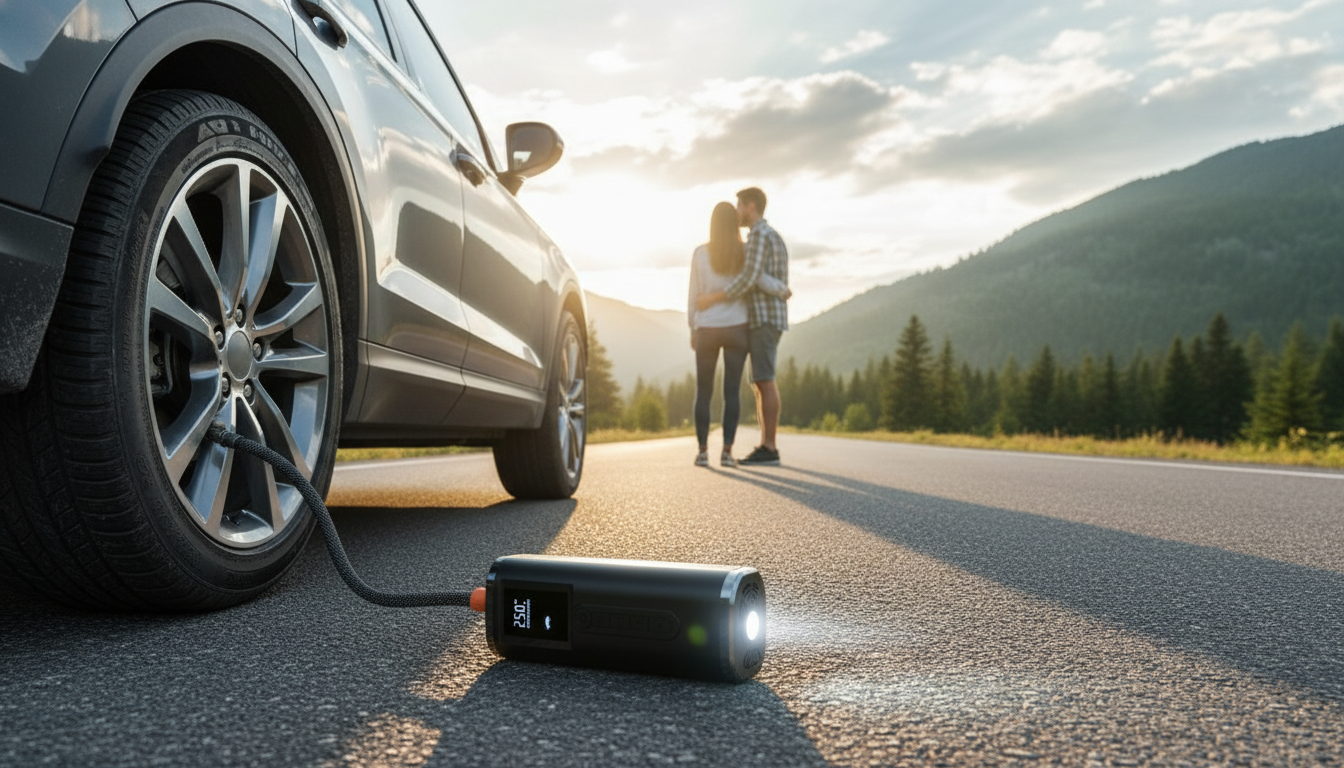
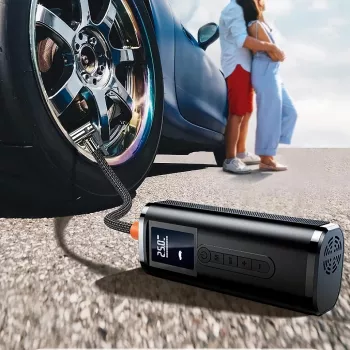
A compact tire inflator that lives in the glove box can turn a stressful low-pressure warning into a quick pit stop. This wireless 150PSI inflator pairs a digital display with an LED light to help top up tires accurately, even on dark roadsides. It’s designed for everyday drivers who want speed, portability, and clearer pressure control without hunting for a gas-station air hose.
Most drivers don’t need a shop compressor—they need an easy way to restore a few missing PSI before the commute, a school pickup, or a road trip. A wireless inflator like this is made for fast, convenient top-ups when a tire is slightly low, helping you get back to normal pressure without detouring for an air hose.
The digital readout is a practical upgrade over analog stick gauges: it lets you set a target, confirm where you are now, and make small, controlled adjustments. And when the warning light comes on at night or in bad weather, the integrated LED light adds visibility right where it matters: at the valve stem and around the wheel area.
It’s also useful for other inflatables (as long as the valve type/adapter matches and the required pressure is within the unit’s range). For most cars, the key match is the Schrader valve used on standard passenger tires.
Not having to route a cord to a 12V outlet can make a quick inflation feel much simpler—especially when you’re parked tight, managing passengers, or working in the rain. A compact wireless inflator is easier to grab, position, and use without cable management.
A 150PSI maximum rating provides headroom for typical passenger-car tire pressure ranges. The important detail is the target: inflate to your vehicle manufacturer’s recommended PSI found on the driver-door jamb placard (not the tire sidewall maximum). For tire safety guidance, see NHTSA Tire Safety.
A clear number reduces guesswork. You can confirm current pressure, add air in short increments, and re-check without bouncing between tools. This can help reduce “overfill then bleed” cycles that waste time and can throw off consistency.
Finding the valve stem quickly matters. The LED light helps you align the connector squarely, which can reduce hissing leaks caused by a slightly crooked attachment. It also improves basic roadside visibility while you work near traffic.
Size is a feature when the goal is everyday readiness. A smaller inflator is more likely to stay in the car—door pocket, trunk organizer, or glove box—so it’s actually available when the tire pressure light surprises you.
Before choosing a portable inflator, focus on real-world compatibility and habits:
| If this is your situation | This type of inflator fit |
|---|---|
| Occasional low-pressure warning, city driving | Wireless compact inflator |
| Frequent tire changes / multiple vehicles | Higher-capacity compressor (corded) |
| Night driving or emergency kit focus | Inflator with LED + digital display |
| Large off-road tires needing big volume | High CFM compressor (often 12V clamp-to-battery) |
Tip for consistency: measure and inflate when tires are “cold” (before driving or after the car has been parked for a few hours). Temperature can change pressure readings; for more context, AAA’s overview is a helpful reference: AAA — Tire Pressure Tips.
Maintaining correct tire pressure can also support efficiency over time; the U.S. Department of Energy provides practical guidance here: U.S. Department of Energy — Fuel Economy and Tire Pressure.
| Item | What to look for |
|---|---|
| Max pressure | Up to 150PSI rating for broad use; inflate to the vehicle placard PSI |
| Display | Digital readout for easier target setting and verification |
| Lighting | LED light for valve access and roadside visibility |
| Portability | Wireless, compact form for emergency kits and daily carry |
Use the vehicle manufacturer’s recommended pressure on the driver-door jamb placard (or in the owner’s manual), not the tire sidewall maximum. For the most consistent reading, check and inflate when the tires are cold.
A portable inflator can temporarily add air to a tire that’s slightly low, but it won’t solve a puncture or damaged tire. If the tire keeps losing pressure, it needs inspection and repair or replacement.
Tire pressure drops as temperatures fall, and a cold snap can reduce PSI enough to trigger the warning even without a leak. Verify the pressure with a gauge and inflate back to the door-placard specification.










Leave a comment