
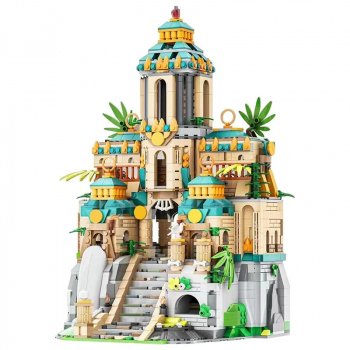
A temple-themed build delivers that sweet spot between puzzle-like assembly and cinematic payoff: hidden chambers, treasure accents, layered stone textures, and a silhouette that looks right at home on a bookshelf. The Lost Temple Treasure House Model Building Blocks leans into that “expedition diorama” vibe—part architecture, part story scene—so the fun doesn’t end when the last piece clicks in. For more guidance, see [PDF] The Lost Temple Of Israel A Real Life Indiana Jones Story.
Below is a practical guide to what makes this kind of model satisfying, how to set up a smooth build session, and how to get maximum display value once your temple is complete. For further reading, see Ain’t Dere No More | Historic New Orleans Collection.
This is a model-style build designed to live on a desk, bookshelf, or hobby display—especially if you like builds that look “complete” even without minifigures or extra accessories. Plan to build on a large, clear surface with bright lighting, and keep the packaging (and any parts trays) until the final step to reduce the odds of a missing-piece scare.
| Item | Details |
|---|---|
| Product name | Lost Temple Treasure House Model Building Blocks |
| Price | 182.01 USD |
| Availability | In stock |
| Product page | https://gskbuy.com/lost-temple-treasure-house-model-building-blocks/ |
Temple builds tend to feel “premium” because they combine architectural structure with lots of small environmental details. While exact parts vary by set, this style of model usually includes:
A temple model can look complex, but it’s usually the repeating textures and layered surfaces that make the build take longer—not “hard” techniques. A little preparation makes the whole session more relaxing.
Group pieces by type and size (tiles, bricks, slopes, specialty pieces). Temple walls often call for the same few parts repeatedly, so quick access saves a surprising amount of time.
Shallow compartments keep small elements visible and prevent accidental spills. If you build in multiple sessions, it also helps you restart without re-sorting everything.
When the instructions present small modules—pillars, door frames, treasure clusters—finish them completely before attaching to the main structure. It keeps the workbench tidy and reduces “where does this go?” moments later.
Temple walls rely on clean, square layers. If a section is one stud off or slightly skewed, the next layers can magnify the problem into gaps that are harder to correct. Quick alignment checks help the entire model feel crisp.
Many temple textures are intentionally repetitive. A five-minute pause can prevent missed steps and saves time compared to backtracking later.
Once complete, this kind of build really shines with small display tweaks—especially lighting and contrast.
If you’re putting together a full gift bundle for a hobbyist, comfort and cleanup matter too. A soft, polished top like the Elegant Silk Print Shirt for Women – Office & Casual Wear works well for long build sessions, and a statement home upgrade like the Luxury Gold Ceramic Bathroom Sink fits the same “treasure” aesthetic for a decor-minded recipient.
Yes. In the Indiana Jones film timeline, Temple of Doom is set in 1935 and Raiders of the Lost Ark is set in 1936.
It varies with complexity and experience, but a display-oriented temple build often takes several hours across one or more sessions. Sorting pieces first and building in modules can noticeably shorten the total time.












Leave a comment