
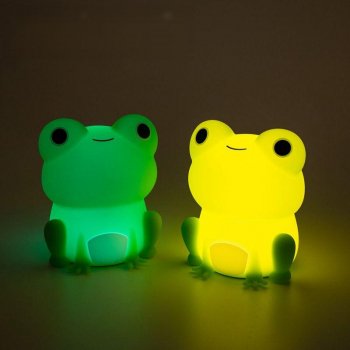



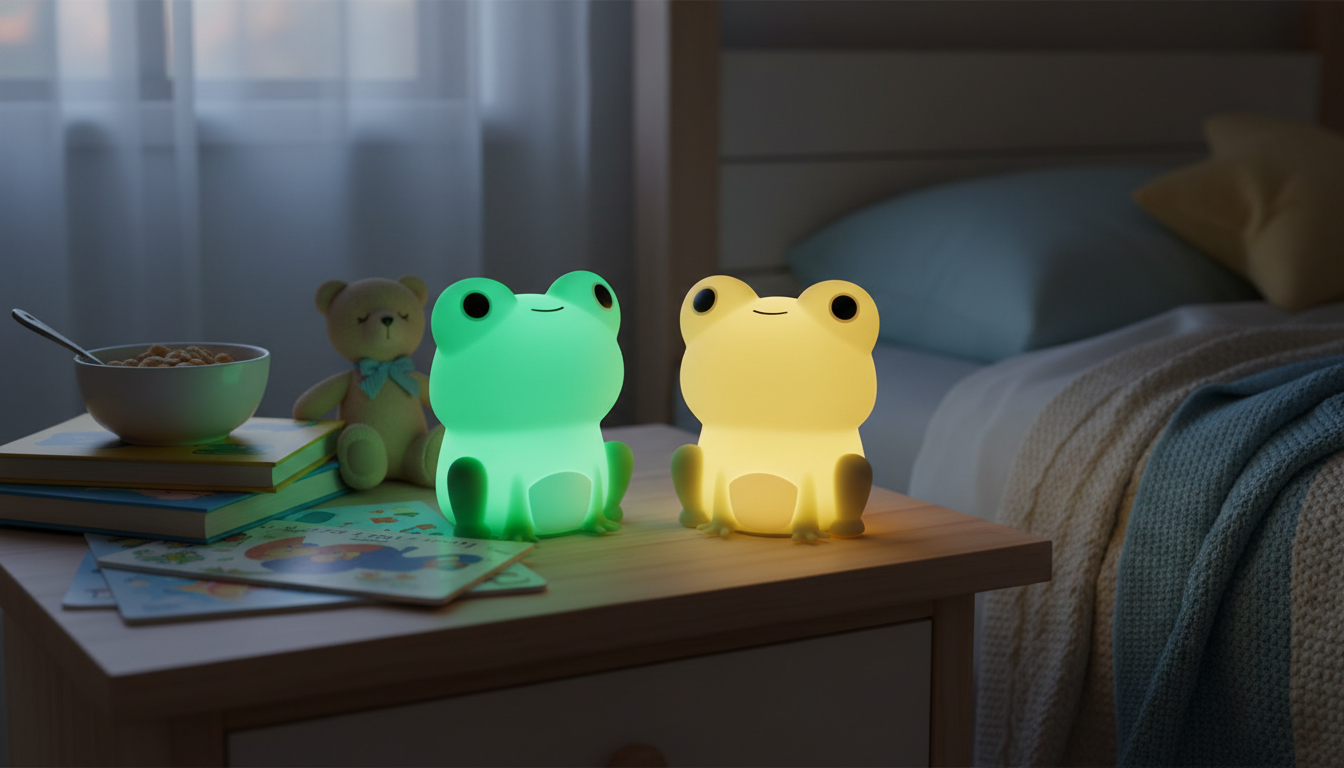
A friendly frog-shaped night light can make bedtime feel calmer while giving just enough gLow for comfort, late-night check-ins, and nursery tasks. Soft silicone, adjustable brightness, and color options help match different ages, sleep preferences, and room setups without harsh overhead lighting. The Frog Night Light for Kids is an excellent addition to any young child’s bedtime routine. This Frog Night Light for Kids offers both comfort and fun for little ones.
A character night light can do more than decorate a room—it can become part of the rhythm of the evening. When the Frog Night Light for Kids is gentle and predictable, it supports a smoother transition from playtime to rest.
For general sleep-environment guidance, resources like HealthyChildren.org (American Academy of Pediatrics) and the National Sleep Foundation emphasize keeping nights calm, consistent, and low-stimulation—exactly where a dimmable Frog Night Light for Kids can help.
Kids tend to treat bedside items like companions, not delicate décor. A soft silicone Frog Night Light for Kids is easier to live with day-to-day, especially for little hands that want to carry and reposition it.
For any children’s product, it’s also smart to stay aware of safety guidance and recalls from the U.S. Consumer Product Safety Commission (CPSC).
Brightness matters as much as color. The best night light is usually the one that can get very dim—because “just enough” light helps with comfort without turning bedtime into another activity.
| Bedtime moment | Recommended light level | Reason |
|---|---|---|
| Wind-down and cuddles | Low | Keeps the room soothing and reduces overstimulation |
| Storytime | Low to medium | Bright enough to see pages while staying comfortable |
| Falling asleep | Lowest comfortable level | Minimizes disruption to sleep |
| Nighttime check-in | Low | Allows quick visibility without fully waking a child |
| Diaper change / quick cleanup | Medium (briefly) | Supports safe handling and visibility while staying less harsh than overhead lights |
Color modes give you flexibility: calm tones for sleep, brighter looks for reading, and fun options for routine-building. The key is to treat color as a tool—especially if your child gets energized easily.
If your child asks to “keep it bright,” try a compromise: a brighter setting during storytime, then a dim warm tone during snuggles, then the lowest comfortable setting for sleep.
A Frog Night Light for Kids is most helpful when it’s placed where you actually need light—near the bed, near the door, or wherever nighttime routines happen. The goal is to avoid flipping on overhead lighting that can feel sudden and alerting.
A night light should feel comforting, not distracting. Small setup choices can make a noticeable difference in how well it supports sleep and nighttime caregiving.
If you want an option that checks the main “kid night light” boxes—soft feel, adjustable brightness, and fun color modes—this frog design is an easy fit for nurseries and bedside tables.
Shop: Frog Night Light for Kids – Soft Silicone, Dimmable, Colorful Light
For families refining the full bedtime routine, keeping oral care tools organized can also help streamline the evening. If you’re updating your bathroom counter setup, this is also in stock: Electric Dental Scaler for Tartar and Stain Removal.
If this is about pet frogs/amphibians, many species do best with lighting that matches their natural day/night cycle—avoid bright light at night and follow species-specific care guidance. If it’s about a Frog Night Light for Kids, the best choice is a dim, gentle light that supports sleep rather than a bright room lamp.
For pet frogs, nighttime lighting is usually unnecessary and can be stressful; many do better with darkness at night and proper daytime light/heat as needed for the species. For children, a low, warm, dimmable Frog Night Light for Kids can help with comfort and quick visibility without fully waking them.











Leave a comment