HomeBlogBlogTwin Over Twin Bunk Bed With Slide: Size & Safety Guide

Twin Over Twin Bunk Bed With Slide: Size & Safety Guide

Twin Over Twin Bunk Bed With Slide: Size &Amp; Safety Guide

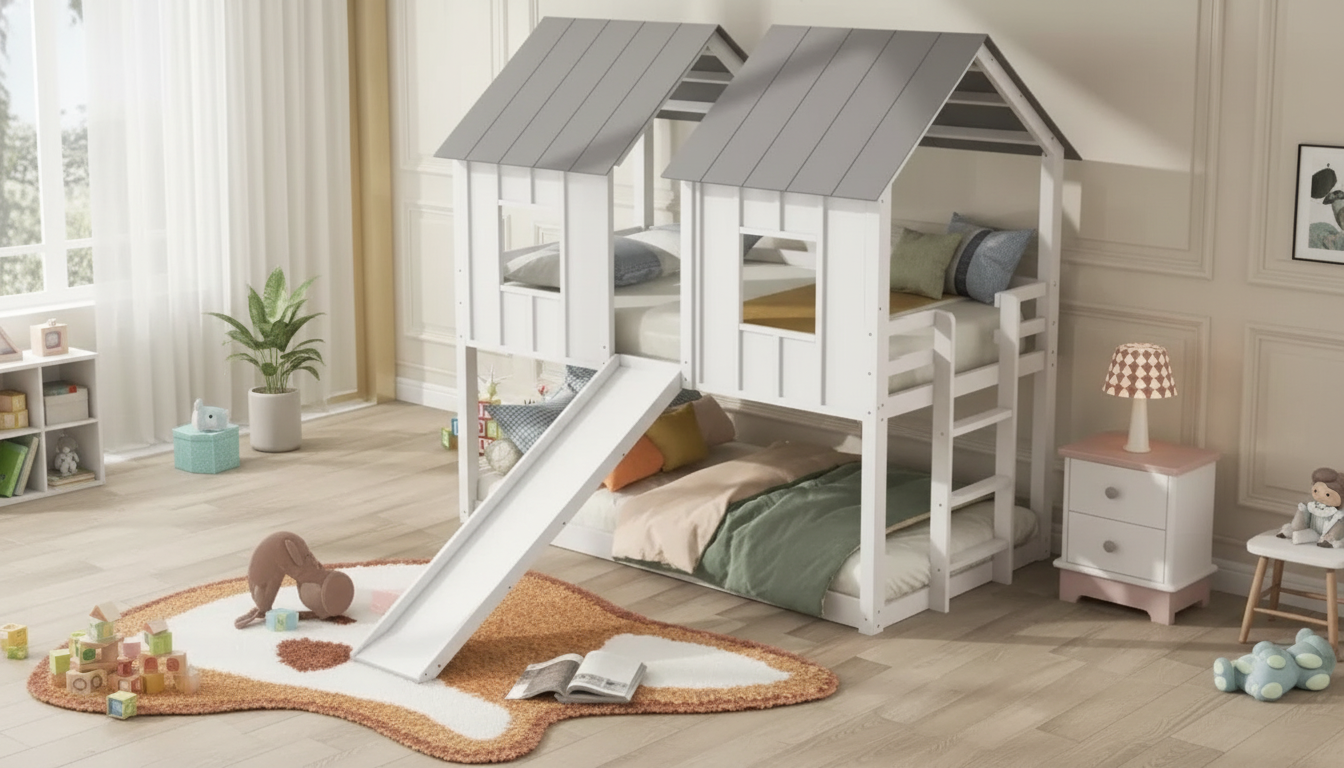
Twin Over Twin Bunk Bed with Slide and Ladder

A twin-over-twin bunk bed with a slide and ladder can turn a shared bedroom into a space that feels bigger, more organized, and a lot more fun. Instead of two beds taking up prime floor space, the vertical layout opens room for play, a reading corner, or practical storage. The slide adds a built-in “activity” feature, while the ladder keeps top-bunk access compact and predictable.

What This Bed Setup Adds to a Kids’ Room

  • Two twin sleeping surfaces that work well for siblings, sleepovers, or kids who want their own defined spaces.
  • A slide that brings movement and play into the room without needing extra large toys on the floor.
  • A ladder that provides a direct, space-efficient route to the top bunk.
  • More usable floor space than two separate twin beds placed side by side.
  • Easy “zoning” potential—sleep above/below, play nearby—especially when paired with a rug or small reading nook.

Key Measurements to Confirm Before Buying

Measuring is what separates a smooth install from a cramped room. Before committing, confirm the bed’s footprint and how the slide changes traffic flow. Also consider how the bed will travel into the room—tight stair turns and narrow doorways can be the real limiting factor.

  • Room ceiling height: plan for comfortable head clearance above the top bunk so a child can sit up without feeling boxed in.
  • Overall footprint: measure bed length/width plus the slide landing area and walking clearance.
  • Doorways and stairs: verify the longest components can be carried to the room without damage.
  • Window and vent placement: avoid blocking airflow, egress windows, or baseboard heaters.
  • Mattress thickness limits: follow the manufacturer’s maximum thickness so guardrails still do their job.

Quick measuring checklist

Area to measure What to check Practical tip
Ceiling height Space above top bunk Leave enough room for a child to sit up comfortably
Slide zone Landing/exit clearance Keep a clear path and add a soft rug or foam mat
Walkways Safe passing space Allow room for drawers, closet doors, and night lighting
Mattress height Guardrail coverage Top mattress should sit well below the top of guardrails

Safety Features That Matter Most

A slide and elevated sleep surface can be a great combination, but only when the bed’s safety features are treated as non-negotiable. Prioritize designs that support stable climbing, secure sleeping, and predictable slide use.

  • Guardrails: the top bunk should have continuous guardrails with a safe height above the mattress.
  • Ladder grip: look for stable steps and usable handholds; secure attachment points help reduce wobble.
  • Slide design: smooth edges, a stable mount, and a gentle exit angle support safer play.
  • Spacing checks: avoid designs with openings that could pose entrapment hazards.
  • Age and use rules: top bunks are commonly recommended for older children; always follow product guidance.
  • Routine inspections: tighten hardware periodically and watch for cracks, looseness, or squeaks that signal movement.

For additional safety guidance, consult the CPSC bunk bed business guidance and the ASTM F1427 bunk bed safety standard for the types of hazards products are designed to prevent.

Materials, Build, and Everyday Durability

Kids use bunk beds hard—climbing, shifting, and the occasional enthusiastic slide run. A durable frame and solid joints are what keep the bed feeling steady over time.

  • Frame material: both solid wood and metal can work well; prioritize rigidity and secure joints over appearance alone.
  • Finish quality: smooth edges and durable coatings help reduce splinters, snags, and scuffs.
  • Weight capacity: confirm limits for each bunk and the slide (if specified), especially if sleepovers are frequent.
  • Noise reduction: felt pads at contact points and consistently snug fasteners help cut down creaks.
  • Mattress support: slats or platform supports should be evenly spaced and firmly secured so mattresses sit flat.

Room Layout Ideas That Make the Slide Work

The slide changes how the room functions, so layout matters as much as the bed itself. The goal is a clear run-out area, a safe ladder approach, and fewer “collision points” with furniture corners.

Setup and Care Tips for Long-Term Use

Product Snapshot

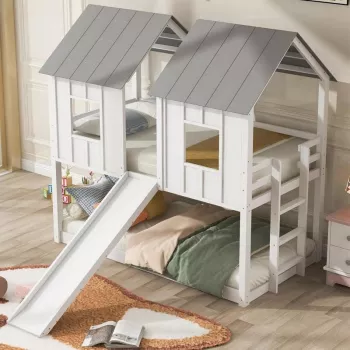
If a playful space-saver is the goal, the Twin Over Twin Bunk Bed with Slide and Ladder is designed to combine sleep and activity in one footprint.

More In-Stock Finds

FAQ

Is a slide safe on a bunk bed?

It can be safe when the slide mounts firmly, edges are smooth, and there’s a clear landing zone. Use a soft mat or rug at the exit, keep the pathway open, and enforce one-at-a-time sliding while following the bed’s age and weight guidance.

What mattress thickness works best for the top bunk?

The best choice is whatever stays within the manufacturer’s maximum thickness so the guardrails remain effective. In many cases, a slightly thinner twin mattress helps maintain safe guardrail height while still providing proper support.

How much space is needed around the ladder and slide?

Leave open walkways so kids can climb and exit without bumping into door swings or furniture corners. Measure the slide’s projection and keep extra buffer space at the exit so there’s room to slow down and step away safely.

Was this article helpful?

Yes No
Leave a comment
Top

Yay! 10% Off Just for You!

Join our community and enjoy 10% off your first order. Subscribe for exclusive deals!

Shopping cart

×