
Large open layouts and multi-room spaces can trap dust, smoke, pet dander, and seasonal allergens—especially when daily life includes cooking, candles, shedding pets, or frequent comings and goings. A smart air purifier designed for up to 3800 ft² adds the convenience layer many homes need: remote control, scheduling, and voice commands that help keep air feeling fresher without constant manual adjustments.
When shopping for a connected model, it helps to look beyond “maximum coverage” and focus on how you’ll actually use it day to day: where it sits, how long it runs, and how consistently the filters are maintained.
A smart air purifier isn’t just a fan and filter in a taller box. The “smart” part is about control, consistency, and reducing friction—so the purifier stays on and effective.
Big coverage ratings are most useful in homes with wide, shared spaces—think open-plan living rooms that flow into kitchens, finished basements, lofts, and large studio-style areas. In real homes, walls, doorways, and long hallways can limit how much cleaned air makes it from one zone to another, even if the purifier is powerful.
| Layout | Placement suggestion | Everyday setting |
|---|---|---|
| Open-plan living + kitchen | Central area with clear intake/outlet space | Low/Auto; boost during cooking |
| Basement or game room | Near the center, not pressed against walls | Medium for steady circulation |
| Large bedroom suite | Across from the bed, away from drapes | Low at night; higher for daytime refresh |
| Office/studio with equipment | Near the main activity zone, away from vents blasting air | Low/Medium; boost during dustier work |
For deeper background on home air cleaning, the EPA’s guide to air cleaners and AHAM’s overview of CADR and performance ratings can help you compare products more confidently.
| Routine name | Trigger | What it does |
|---|---|---|
| Cooking boost | Voice command or kitchen timer end | Raises fan speed for a set duration |
| Bedtime quiet | Good night | Switches to a quieter setting and dims other smart devices (optional) |
| Allergy daytime | Morning schedule | Runs a stronger cycle during high-activity hours |
| Task | Typical cadence | Why it matters |
|---|---|---|
| Inspect intake vents and surrounding area | Weekly | Maintains airflow and reduces strain |
| Clean/empty pre-filter area (if applicable) | Every 1–2 weeks | Catches larger debris early |
| Check filter status | Monthly | Prevents performance drop-offs |
| Replace filter | As indicated by the device/app or environment | Restores filtration and airflow |
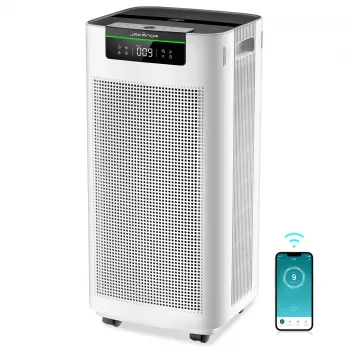
Smart Air Purifier for Large Rooms 3800 ft² with APP & Alexa Control is built for large coverage with convenient app management and Alexa voice control. It’s a practical fit for households that want scheduled operation, quick remote changes, and hands-free commands in high-traffic areas like open living rooms and kitchen-adjacent spaces.
| Feature | Why it helps |
|---|---|
| Up to 3800 ft² coverage | Supports larger open spaces and big rooms |
| App control | Adjust settings and schedules without walking to the unit |
| Alexa control | Hands-free operation and smart-home routines |
Place it where intake and exhaust airflow won’t be blocked—several inches to a few feet away from walls, curtains, and tight corners. In large rooms, positioning near the main activity zone helps capture everyday dust and odors, and it’s best to avoid aiming strong airflow directly at sleepers if it feels drafty.
It can reduce smoke particles and may lessen some odors depending on the filter setup and airflow. Strong cooking smells and VOCs usually improve more when the purifier has an adsorbent stage like activated carbon, and results depend on fan speed, run time, and filter condition—ventilation still helps.
Replacement timing varies by home conditions: pets, high dust, smoke, and renovation work can shorten filter life. Follow the device/app indicator and the manufacturer’s guidance, since replacing on time restores airflow and filtration effectiveness.











Leave a comment