
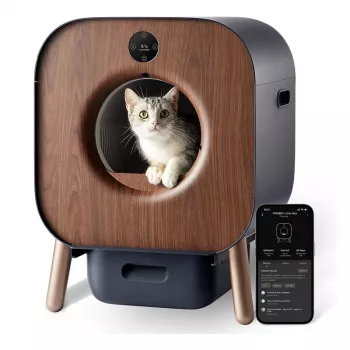
Multi-cat homes need a litter setup that stays clean, controls odor, and protects curious cats from moving parts. A well-designed automatic self-cleaning litter box can reduce daily scooping, keep clumps from building up between clean cycles, and support consistent litter habits—while built-in safety sensors help prevent operation when a cat is entering, exiting, or lingering near the waste chamber.
For guidance on general feline care and healthy routines, resources from the American Veterinary Medical Association (AVMA) and litter box best practices from the Cornell Feline Health Center are helpful references.
When two (or more) cats share a box, litter conditions can change quickly—sometimes within minutes. Automation helps keep the box “open for business” throughout the day.
In a shared home, cats don’t always wait politely for a cycle to finish. Strong safety design is what separates “convenient” from “comfortable and trustworthy.” Look for layers of protection rather than a single sensor.
Even with great sensors, placement and setup still matter. Keep cords secured, place the unit on stable flooring, and avoid cramped spots where a cat may feel cornered while the unit is operating.
Multi-cat performance isn’t just about whether the unit can clean—it’s about whether it can keep up during busy windows (morning, post-meal, or overnight).
If your cats tend to “queue up” for the box, prioritize a design that returns to ready-state quickly, and consider whether your home layout calls for more than one box—especially across multiple floors.
Use this snapshot to decide whether automation fits the household’s time, space, and maintenance preferences.
| Factor | Manual litter box | Automatic self-cleaning litter box |
|---|---|---|
| Daily effort | Scooping 1–2+ times/day (often more with multiple cats) | Waste removal handled automatically; periodic bin changes |
| Odor control | Depends on scooping frequency and litter choice | More consistent removal can reduce odor spikes |
| Upfront cost | Low | Higher (device + consumables where applicable) |
| Safety considerations | No moving parts | Relies on sensors and auto-stop features; placement and setup matter |
| Cat acceptance | Often easier initially | May require slow introduction, especially for noise-sensitive cats |
A great unit can still fail if it’s placed where cats feel trapped or if it’s introduced too quickly. Multi-cat homes do best with a calm, staged rollout.
Safety depends on reliable presence/weight sensing and auto-stop behavior, so always follow the manufacturer’s minimum-weight guidance. Supervise early use, and use delayed-clean settings until the kitten is fully comfortable entering and exiting without hesitation.
It depends on interior space, waste-bin capacity, and how often the unit cycles, but high-traffic homes may still benefit from a second box. If you notice crowding, stronger odors between bin changes, or conflict around access (especially on multiple floors), add another box to reduce stress.
Start with the unit powered off so it functions like a normal box, then reward calm investigation with treats or praise. Enable cleaning on a long delay, run cycles when cats are in another room at first, and reduce vibration by leveling the unit on stable flooring.











Leave a comment