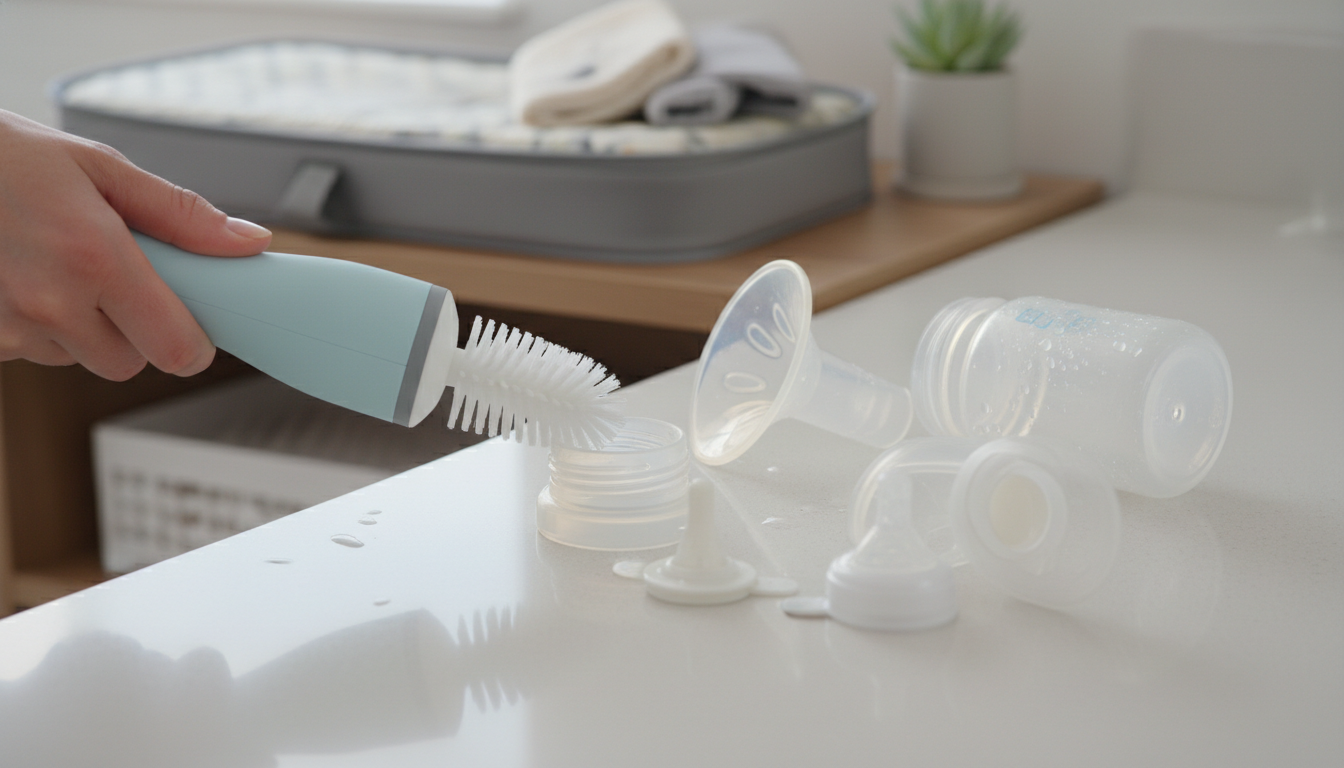
Yes—an electric baby bottle brush can be used on many breast pump parts without scratching, as long as the brush head is truly soft. It’s essential to use light pressure and avoid aggressive scrubbing on clear plastic and silicone pieces. The soft bristles of the Electric Bottle scrubbing Brush effectively clean the surfaces without causing damage, provided that the cleaning technique is gentle. Most damage occurs when stiff bristles, high speed, or abrasive residue (like dried milk film) turns cleaning into sanding. Using an Electric Bottle scrubbing Brush can enhance your cleaning experience, ensuring that your pump parts remain safe and effective without compromising their integrity. With the Electric Bottle scrubbing Brush, you can achieve a pristine clean effortlessly.
Use the softest bristle head available (often labeled “silicone,” “ultra-soft,” or “gentle”). Keep the brush on a low setting whenever possible. High speed plus firm pressure is the fastest route to hazy plastic, micro-scratches, and cloudy flanges or shields.
Before brushing, rinse parts with cool water to remove proteins, then soak in warm soapy water for a few minutes. This loosens milk residue so you can glide the brush over surfaces instead of grinding stuck-on film into the plastic.
In addition to those tips, using the Electric Bottle scrubbing Brush regularly can help maintain the cleanliness and longevity of your breast pump parts.
Electric brushes are most helpful around threads, valve seats, and corners where residue collects. Use gentle, short passes and stop once the surface feels clean—over-brushing clean plastic is when cosmetic wear starts.
Consider that the Electric Bottle scrubbing Brush not only cleans but also sanitizes, making it an essential tool in your cleaning arsenal.
Using an electric brush can also help to sanitize parts more effectively due to the nature of the vibration and motion that the brush creates, which facilitates the removal of bacteria and other harmful pathogens from the surfaces of your breast pump parts. Consider incorporating a safe sanitizing solution into your cleaning routine to further enhance hygiene.
For added convenience, the Electric Bottle scrubbing Brush is designed to tackle tough stains, making your cleaning routine easier.
Understanding the benefits of the Electric Bottle scrubbing Brush can help you choose the best cleaning methods for your breast pump parts.
With the Electric Bottle scrubbing Brush, you can enjoy a more efficient and effective cleaning experience.
Features of the Electric Bottle scrubbing Brush include customizable brush heads for different pump parts.
Using the Electric Bottle scrubbing Brush can help prevent residue buildup, ensuring your equipment stays in top condition.
Safety is paramount, and the Electric Bottle scrubbing Brush offers a gentle yet effective cleaning method.
When maintaining your pump parts, consider integrating the Electric Bottle scrubbing Brush into your routine.
Ultimately, the Electric Bottle scrubbing Brush can streamline your cleaning process and enhance your experience.
For further information on using the Electric Bottle scrubbing Brush effectively, consult the cleaning guide.
Additionally, consider the type of residue you’re dealing with. Milk residue can harden and become difficult to remove if not addressed promptly. Incorporating a soaking step before scrubbing can significantly improve cleaning efficiency. For persistent stains, a mixture of vinegar and baking soda can provide an extra boost to your cleaning routine without damaging the materials.
It’s also worth noting that the use of an electric brush is not just about convenience; it can also save you time and effort, especially when you have multiple components to clean after each use. The efficiency of the Electric Bottle scrubbing Brush allows for a thorough clean that might take much longer with traditional hand scrubbing methods. Moreover, by employing different brush heads designed specifically for various parts, you can customize your cleaning approach for optimal results.
For those who regularly use breast pumps, understanding the materials of your pump parts can guide you in choosing the right cleaning tools. Some materials may react differently to various cleaning methods, so doing a little research can help prevent damage and extend the life of your equipment. Furthermore, always check the manufacturer’s guidelines to ensure you are following the recommended cleaning practices for your specific model.
In summary, while the Electric Bottle scrubbing Brush is a versatile tool, gentle care should always be a priority. The combination of proper brush head selection, soaking techniques, and an understanding of your pump parts will ensure effective and safe cleaning. If in doubt, reverting to manual cleaning methods for delicate parts can be the best approach to maintain your equipment’s integrity.
Clear plastic components (like some bottles, connectors, and collection cups) show scratches more easily, and scratched areas can trap residue over time. Silicone items (duckbill valves, membranes, tubing adapters) usually don’t “scratch” the same way, but they can tear if caught by stiff bristles or twisted by a spinning head. If a piece is thin, flexible, or has delicate edges, hand-washing with a soft manual brush is often safer.
To keep track of your pump parts’ lifespan, it may be helpful to create a checklist or log detailing when parts were last cleaned or replaced. This can prevent any last-minute surprises and ensure optimal performance. Additionally, some users find that keeping a spare set of essential parts can be useful during routine cleaning to maintain the breast pump’s functionality without interruption.
If you notice whitening, hazing, roughness, or tiny grooves, switch to a softer head or hand-wash those parts. Also skip the electric brush for any component the manufacturer specifically recommends washing gently or replacing regularly (like valves and membranes), since wear can impact pump performance.
For a deeper look at brush types, safe cleaning technique, and what to watch for on different materials, visit the full guide here.
Valves and membranes typically need replacement more often than hard plastic parts because they wear and can reduce suction over time. Check your pump brand’s schedule, and replace sooner if you see stretching, curling, cracks, or a drop in output.













Leave a comment