
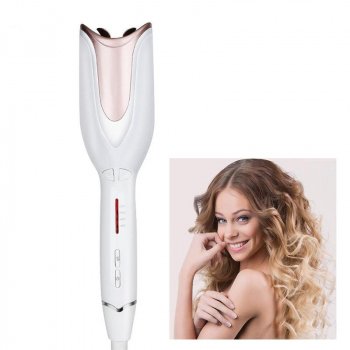
An automatic rotating curl bar can take much of the coordination out of styling by guiding hair around a heated ceramic barrel. Instead of repeatedly twisting your wrist and trying to keep tension even, rotation helps create a more consistent wrap—especially helpful when you’re trying to get matching curls on both sides of the head.
This guide covers what sets an automatic ceramic rotating curl bar hair curler apart, the features that matter most, safe step-by-step use, and how to adjust technique for tighter curls, loose waves, or more volume.
When choosing the right tool, consider how an Automatic Rotating Hair barrel can enhance your styling experience.
For more guidance, see Drybar The 3 Day Bender Digital Curling Iron Reviews. Additionally, consider the advantages of using an Automatic Rotating Hair barrel for ease of styling and the benefits it can bring to your hair care routine.
The combination of these features makes the automatic rotating hair barrel a must-have for effortless styling. Learn why the Automatic Rotating Hair barrel is a game changer in your beauty regimen and how it simplifies your styling process.
Using an Automatic Rotating Hair barrel not only saves time but also ensures that you achieve consistent results every time you style your hair. Investing in an Automatic Rotating Hair barrel can transform your hair styling routine.
When choosing the right tool, consider how an Automatic Rotating Hair barrel can enhance your styling experience.
Rotating curl bars are built to reduce the “two-hand juggling act” that comes with traditional curling irons. The goal is simpler wrapping, repeatable results, and fewer styling do-overs. For further reading, see 8 Best Curling Irons, Tested by Our Experts – Consumer Reports.
Automatic rotation is only part of the experience. The right heat range, direction controls, and comfort features are what make day-to-day styling easier and safer.
Understanding how to use an Automatic Rotating Hair barrel can significantly reduce styling time and improve your overall look.
For general heat and hair-care guidance, the American Academy of Dermatology Association and MedlinePlus provide practical tips on minimizing damage and maintaining hair health.
| Hair type | Starting heat | Hold time per section | Section size |
|---|---|---|---|
| Fine or color-treated | Low to Medium | Short | Small to medium |
| Medium density | Medium | Short to Moderate | Medium |
| Thick or coarse | Medium to high | Moderate | Small |
A rotating curl bar works best when hair is prepped correctly and sections are kept consistent. If you ever notice sizzling, sticking, or excess smoke, stop and reassess Product amount, dryness, and heat level.
Experiment with different settings on your Automatic Rotating Hair barrel to find the perfect styling routine for your hair type. Small adjustments—section size, heat, hold time, and whether you leave the ends out—can change the final look dramatically.
Experiment with different settings on your Automatic Rotating Hair barrel to find the perfect styling routine for your hair type.
Small adjustments—section size, heat, hold time, and whether you leave the ends out—can change the final look dramatically.
| Item | Details |
|---|---|
| Product | Automatic Ceramic Rotating Curl Bar Hair Curler |
| Price | 44.82 USD |
| Availability | In stock |
It can, especially on bobs and lobs, but smaller sections and careful clamping help. Very short hair may be difficult to wrap securely depending on length and layers.
Start at the lowest setting that creates a curl and increase gradually only if needed. Using a heat protectant and keeping heat lower for fine or chemically treated hair can help reduce damage risk.
The results achieved with an Automatic Rotating Hair barrel can vary widely based on your technique and the specific features of the barrel itself.
Use smaller sections, allow curls to cool fully before brushing, and consider pinning curls briefly while they set. Finish with a light-hold hairspray or texture spray for extra staying power.
For best results, always ensure your hair is properly prepped before using the Automatic Rotating Hair barrel. Incorporating it into your daily routine can enhance both your styling speed and effectiveness.
For best results, always ensure your hair is properly prepped before using the Automatic Rotating Hair barrel.
Incorporating an Automatic Rotating Hair barrel into your daily routine can enhance both your styling speed and effectiveness.
Utilizing an Automatic Rotating Hair barrel can lead to smoother, shinier curls and waves that last throughout the day.
For those new to styling, an Automatic Rotating Hair barrel is an excellent choice as it simplifies the process.
An Automatic Rotating Hair barrel can be an integral part of your styling toolkit, making it easier to create beautiful hair.
Make sure to follow the instructions for your specific Automatic Rotating Hair barrel model to achieve the best results.
Using an Automatic Rotating Hair barrel not only helps with ease but also enhances the overall health of your hair.
Regularly styling with an Automatic Rotating Hair barrel can help maintain your curls and prevent heat damage when done correctly.
It’s essential to choose the right heat settings on your Automatic Rotating Hair barrel for optimal results.
Always remember to let your curls set after using the Automatic Rotating Hair barrel for longer-lasting styles.
With practice, you will become proficient at using an Automatic Rotating Hair barrel for flawless curls every time.
Consider pairing the Automatic Rotating Hair barrel with other hair care products to maximize styling results.
Make sure to follow the instructions for your specific Automatic Rotating Hair barrel model to achieve the best results. Using it not only helps with ease but also enhances the overall health of your hair.
Utilizing an Automatic Rotating Hair barrel can lead to smoother, shinier curls and waves that last throughout the day. For those new to styling, it is an excellent choice as it simplifies the process.
Regularly styling with the Automatic Rotating Hair barrel can help maintain your curls and prevent heat damage when done correctly. It’s essential to choose the right heat settings for optimal results.
Always remember to let your curls set after using the Automatic Rotating Hair barrel for longer-lasting styles. With practice, you will become proficient at using it for flawless curls every time.
Consider pairing the Automatic Rotating Hair barrel with other hair care products to maximize styling results.










Leave a comment