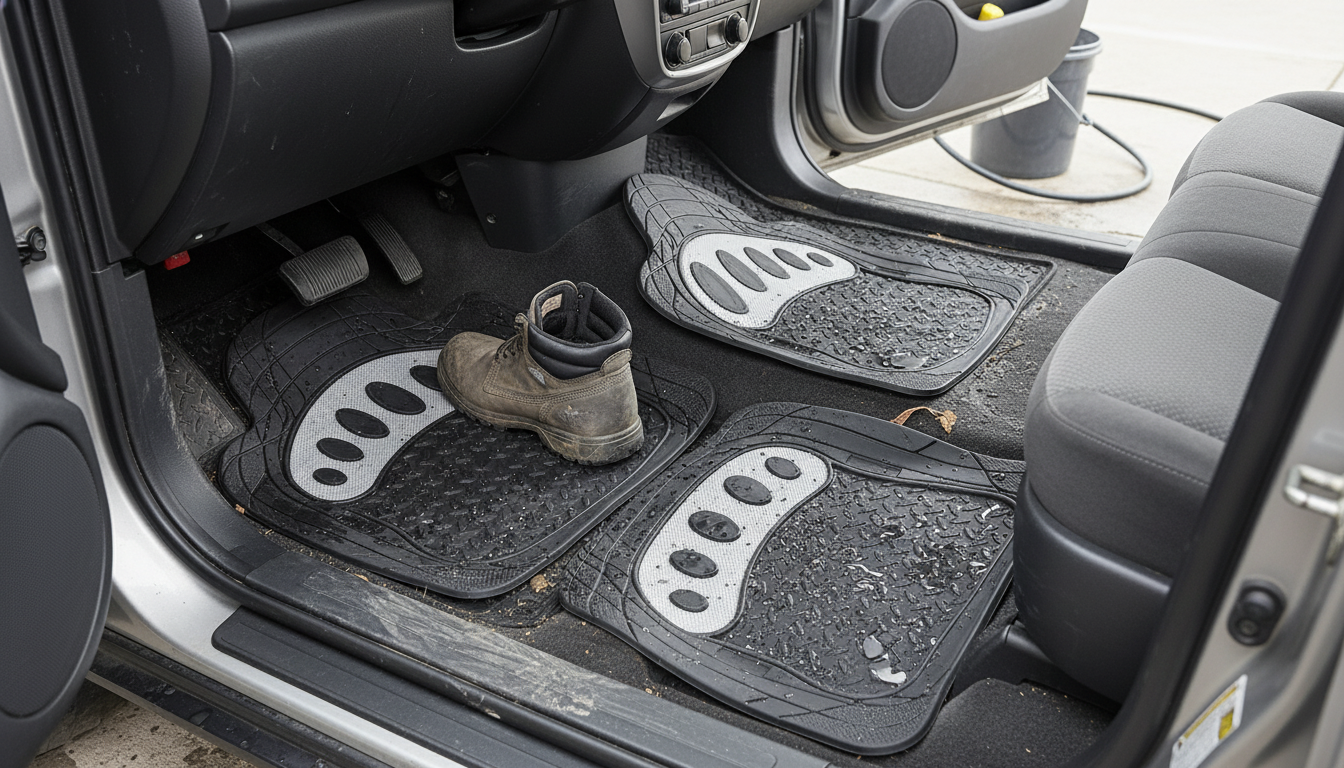
All-weather floor mats are a practical upgrade for drivers who deal with mud, slush, sand, spills, and daily wear. A heavy-duty universal set can help protect carpet, simplify cleanup, and cut down on lingering odors—without requiring a vehicle-specific kit. The difference comes down to durable materials, smart channel design, and a secure fit that stays put underfoot through stop-and-go commutes, school drop-offs, and weekend trips.
“Heavy-duty” isn’t just marketing language—it should translate into structure and long-term resilience. A genuinely heavy-duty mat is typically thicker and more rigid, resisting curling, cracking, and deformation across temperature swings. “All-weather” means the surface is engineered to handle water, road salt, and debris without soaking through or becoming slippery.
Universal mats live or die by their materials. Rubber-like compounds—commonly TPE or PVC blends—aim to balance flexibility (so they conform to the footwell) with durability (so they don’t fold, thin out, or tear at stress points). A quick hands-on check helps: mats that feel overly slick or very thin tend to move more and show wear sooner.
For drivers who frequently carry wet gear—sports bags, umbrellas, work boots—channel depth and wall height matter as much as overall size. A mat can look large but still fail if the lip is too low to contain slush and spillover.
The driver-side mat is a safety item, not just an accessory. The top priority is ensuring the mat lays flat and never interferes with accelerator or brake pedal travel. NHTSA emphasizes safe vehicle operation and the importance of preventing anything from obstructing pedals; staying mindful during installation is a simple way to reduce risk (NHTSA Vehicle Safety).
| Area | What to verify | Why it matters |
|---|---|---|
| Driver footwell | No overlap with accelerator/brake; mat lies flat | Reduces risk of pedal interference |
| Retention | Anchors align (if present) or backing grips carpet | Prevents sliding underfoot |
| Door clearance | Mat edge doesn’t pinch when door closes | Avoids edge curling and wear |
| Rear floor | Covers high-traffic zones without blocking vents/rails | Comfort and HVAC airflow |
Real-world conditions expose whether “all-weather” is doing its job. In steady rain, deep channels help reduce puddling right where shoes rest, which improves comfort and helps maintain traction when repositioning your feet. In winter, a high outer lip can keep salty slush contained—important because saltwater can stain carpet and contribute to persistent damp odors over time.
Seasonal conditions can also affect interior air quality. Keeping wet debris off carpet helps reduce musty smells and makes it easier to maintain a clean cabin during winter driving months (see general vehicle care guidance from the U.S. Environmental Protection Agency).
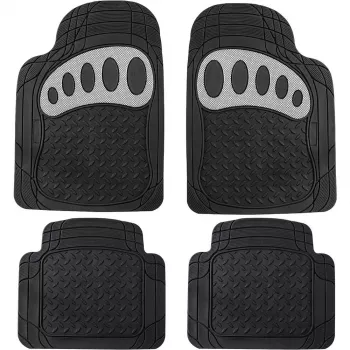
If you want broad compatibility without committing to a model-specific kit, Universal Heavy-Duty All-Weather Car Floor Mats are built for everyday protection against moisture and debris. The all-weather surface and channel design are geared toward containing messes so cleanup stays simple after rain, snow, jobsite dirt, or beach trips.
Brackets aren’t part of car floor mats, but the same selection logic applies to any “heavy-duty” mounting piece: match the required load, choose strong corrosion-resistant material, and confirm proper fitment. For floor mats specifically, prioritize secure retention hardware (factory hooks/eyelets when supported) and a grippy backing so the mat won’t slide.
There isn’t one universally “number one” heavy-duty truck because the best choice depends on towing needs, payload, reliability history, and ownership costs. Popular options often include Ford Super Duty, Ram Heavy Duty, and Chevy Silverado HD/GMC Sierra HD, and whichever you drive, heavy-duty use typically means more mud, salt, and debris—making durable, high-wall mats a smart add-on.












Leave a comment