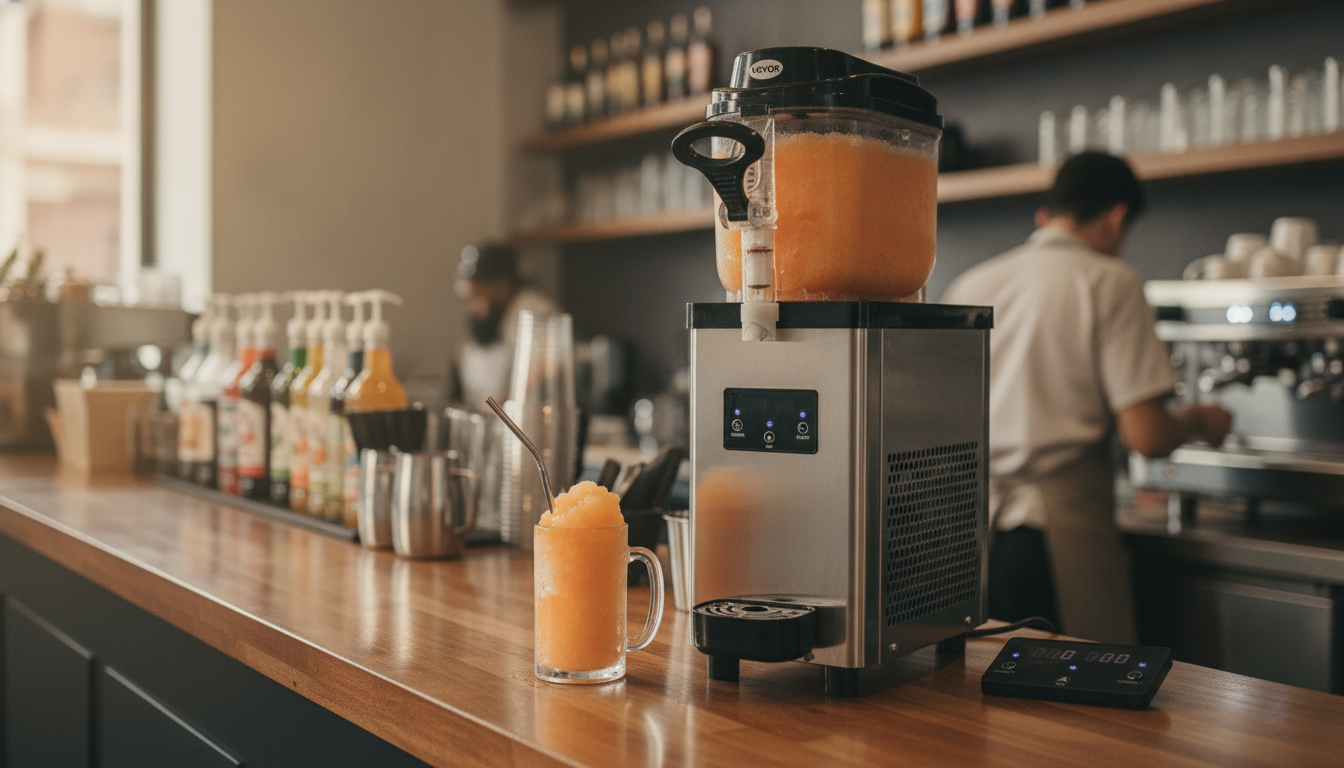
A commercial slushy machine should match the pace of service, menu style, and available counter space without creating extra cleanup or downtime. The right choice comes down to practical details—tank size, cooling performance, consistency control, sanitation, and operating costs—so the machine stays reliable during rush periods and remains simple to maintain between shifts.
Peak service is where most machines either earn their spot on the counter or become a constant source of complaints. A strong unit should:
Capacity is more than “how many liters fit in the bowl.” It’s about how often staff has to refill, how well the machine freezes when it’s running low, and whether you can keep up during predictable spikes (lunch, after-school traffic, weekend events, or game-day crowds).
| Expected peak servings/hour | Typical serving size | Approx. liters needed per hour | Practical tank size to avoid frequent refills |
|---|---|---|---|
| 20 | 12 oz (355 ml) | 7.1 L | 10–12 L |
| 30 | 12 oz (355 ml) | 10.7 L | 12–15 L |
| 40 | 16 oz (473 ml) | 18.9 L | 20–25 L |
| 60 | 12 oz (355 ml) | 21.3 L | 25–30 L |
Slushy mix is high in sugar and stays in a temperature range where strict procedures matter. A simple routine prevents sticky buildup, odor carryover, and downtime caused by leaks or clogged spouts. For general guidance, review the FDA Food Code and the CDC’s food safety resources, then follow your local rules and the manufacturer’s instructions.
| Task | Goal | Notes |
|---|---|---|
| Drain product | Prevent overnight separation and bacterial growth | Follow local food code for hold times |
| Rinse and wash parts | Remove sugar film | Warm water helps dissolve syrup residue |
| Sanitize | Reduce contamination risk | Observe sanitizer concentration and contact time |
| Inspect seals/spouts | Prevent leaks and drips | Replace worn gaskets proactively |
| Air-dry and reassemble | Avoid trapped moisture | Do not towel-dry internal parts if lint is a concern |
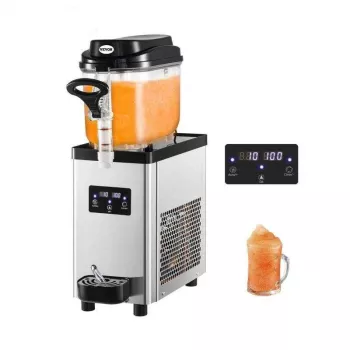
For compact stations or single-flavor service, a smaller-capacity unit can be a practical way to add frozen drinks without redesigning the counter line. The 6L Commercial Slushy Machine is a good fit when you’re targeting lower-to-moderate volume, seasonal specials, or a dedicated add-on station.
| Model | Capacity | Best fit |
|---|---|---|
| 6L Commercial Slushy Machine | 6 L | Small cafés, kiosks, snack bars, seasonal pop-ups |
If you’re upgrading a beverage station, don’t overlook handwashing and cleanup workflow. A dedicated sink area helps staff rinse parts and keep sticky syrup residue from spreading across prep counters. For remodel or replacement projects, consider the Luxury Gold Ceramic Bathroom Sink as an in-stock option for customer-facing or back-of-house use where appropriate.
Freeze-down time depends on starting liquid temperature, sugar/alcohol content, ambient heat, and machine power, but many operators plan on roughly 30–60 minutes from a chilled mix. Pre-chilling the mix is one of the fastest ways to shorten the wait and improve rush recovery.
Manufacturer-approved commercial mixes (or recipes formulated to the correct sugar range) tend to deliver the most repeatable texture. Accurate dilution matters—too little sugar can freeze overly hard, while overly sweet mixes may stay soft and never form a stable slush.
Most operations use a daily empty-wash-sanitize routine, with quick wipe-downs of the spout and drip tray during service and a weekly deep clean for seals and hard-to-reach surfaces. Always follow local food safety rules and the machine’s manual for required frequency and sanitizer contact times.









Leave a comment