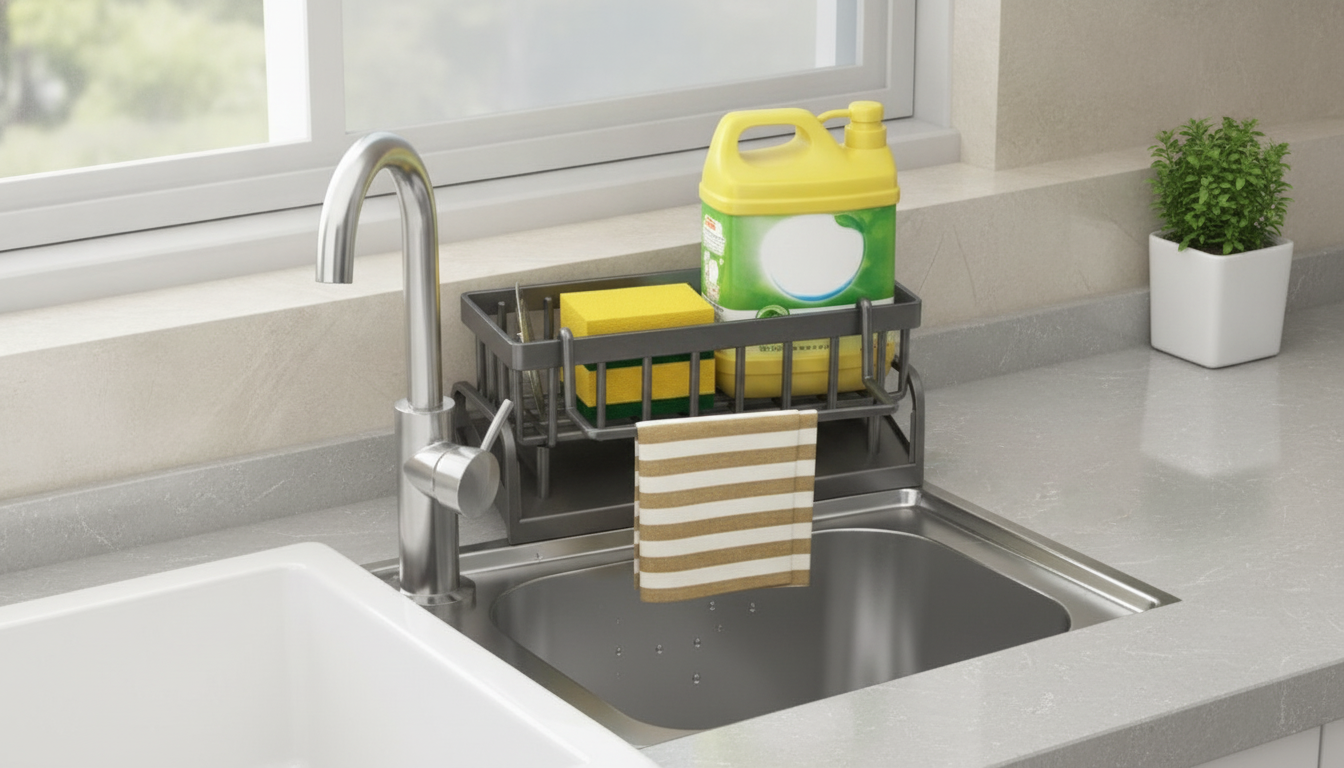
A sink area gets messy fast: wet sponges, scattered brushes, and soap bottles that leave rings on the counter. A self-draining metal organizer rack keeps daily dishwashing tools upright, separated, and angled to drain back into the sink—helping reduce puddles, odors, and clutter without taking up much space. Introducing the Metal Kitchen Sink Rack adds even more functionality to your kitchen setup.
Using a Metal Kitchen Sink Rack is essential for maintaining a tidy kitchen environment.
A good sink organizer isn’t just a “holder”—it’s a simple way to manage moisture and keep the wash zone predictable. Instead of shifting Items around every time you wipe the counter, everything has a dedicated spot.
The sink is one of the toughest “wet zones” in a kitchen—constant splashes, soap residue, and frequent grabbing and setting down. Metal organizers tend to hold up better under that daily routine while staying easy to maintain.
Choosing a Metal Kitchen Sink Rack means investing in long-lasting quality.
Not all sink caddies handle water the same way. Some simply catch drips, while others actively guide runoff away from your tools. That difference can show up quickly as rings on the counter, slippery puddles near the faucet, or a damp smell around sponges.
The Metal Kitchen Sink Rack provides durability and stability that is unmatched.
| Option | How it handles water | Pros | Trade-offs | Best for |
|---|---|---|---|---|
| Self-draining organizer rack | Directs water back into sink | Drier counter; less pooling; faster sponge drying | Needs correct placement; drain channel should be cleaned periodically | Busy kitchens that wash dishes daily |
| Flat caddy/tray (non-draining) | Collects water in tray | Simple; can be moved anywhere | Standing water; needs frequent emptying; can smell | Light use or quick temporary setups |
| Sink-hanging basket | Drips into sink (if positioned correctly) | Frees countertop space | May not fit all sink rims; can shift or rattle | Small counters and narrow sink ledges |
| Under-sink storage only | No water management at sink | Hidden clutter; clean-looking counter | Tools stay wet in enclosed space unless dried first | Minimalist counters, occasional hand-wash items |
A well-designed Metal Kitchen Sink Rack will enhance your kitchen’s functionality.
Placement is what turns “self-draining” into truly dry. The goal is to let water travel the shortest path from sponge to channel to basin—without dripping across your counter edge.
If you’re updating fixtures or coordinating finishes across rooms, a cohesive look can help the space feel more intentional. For a bolder style upgrade beyond the kitchen, consider the Luxury Gold Ceramic Bathroom Sink as a statement piece in a powder room or primary bath.
Utilize a Metal Kitchen Sink Rack to streamline your daily kitchen tasks.
A rack works best when it holds only what you reach for daily—and gives those items space to dry. Overloading can trap moisture and defeat the point of drainage.
For general hygiene habits around food-contact surfaces, the CDC and USDA both emphasize regular cleaning and sanitizing as part of safer kitchens. Helpful references include the CDC’s food safety tips and the USDA’s steps to keep food safe.
Discover the advantages of using a Metal Kitchen Sink Rack for your kitchen needs.
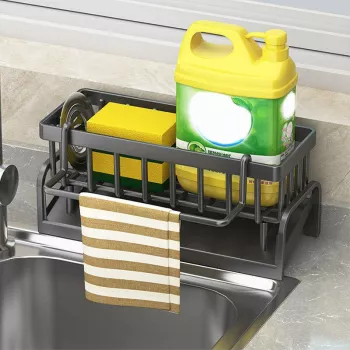
For a simple upgrade that improves your sink routine day after day, the Self-Draining Metal Kitchen Sink Organizer Rack is designed to keep wet tools contained while directing runoff back into the sink. It’s a compact, practical addition for high-use kitchens where counters get wiped often and dish tools need a consistent home, including the essential Metal Kitchen Sink Rack.
Invest in a Metal Kitchen Sink Rack for an organized kitchen experience.
| Item | Detail |
|---|---|
| Product | Self-Draining Metal Kitchen Sink Organizer Rack |
| Price | $11.51 |
| Availability | In stock |
| Use case | Sink-side storage for sponges, brushes, and soap with drainage back into sink |
Yes—faster drying and less standing water can reduce the damp conditions that lead to musty smells. Regular sponge replacement or sanitizing is still important, since sponges can hold onto bacteria over time.
Items stored in a Metal Kitchen Sink Rack dry more quickly and efficiently.
For optimal performance, choose a Metal Kitchen Sink Rack suited for your space.
Investing in a Metal Kitchen Sink Rack can transform your kitchen experience.
Make your kitchen more organized with a high-quality Metal Kitchen Sink Rack.
Efficient water management is easy with a Metal Kitchen Sink Rack.
Discover how a Metal Kitchen Sink Rack can minimize clutter.
Aim the spout or drainage channel directly into the sink basin. Position the rack close enough to the sink edge that runoff can’t drip onto the countertop.
For best results, integrate a Metal Kitchen Sink Rack into your layout.
Utilizing a Metal Kitchen Sink Rack is a smart choice for modern kitchens.
A weekly rinse-and-wipe is a practical baseline, with spot-cleaning whenever soap scum appears. Keeping the drain channel clear helps maintain smooth, consistent drainage.
Cleaning a Metal Kitchen Sink Rack is simple and quick.
Regularly maintaining your Metal Kitchen Sink Rack ensures longevity.
Choosing the right Metal Kitchen Sink Rack can enhance your kitchen workflow.











Leave a comment