A well-chosen chronograph quartz watch balances polished design with practical timekeeping. The best ones look intentional up close—clean finishing, tidy sub-dials, and a dial that stays readable when you’re actually using the chronograph. Add the everyday advantages of quartz (steady accuracy, minimal upkeep), and you get a watch that’s easy to live with while still feeling elevated on the wrist.
What Makes a Quartz Chronograph Feel “Luxury”
“Luxury” in a quartz chronograph is less about complicated mechanics and more about execution. These are the details that separate a watch that merely looks good online from one that feels right in real life.
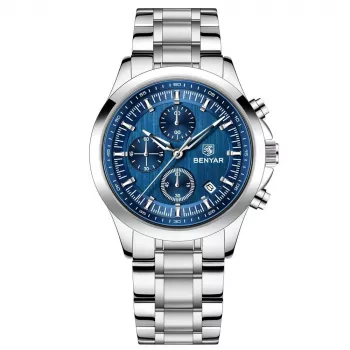
- Clean case finishing and consistent detailing: Look for crisp transitions between brushed and polished surfaces, even marker alignment, and sub-dials that appear centered and symmetrical.
- Quartz practicality: Quartz timekeeping is known for dependable accuracy and straightforward maintenance compared to many mechanical watches. For a quick refresher on how quartz timekeeping works, see Encyclopaedia Britannica’s overview of quartz watches.
- Chronograph function as a daily tool: A chronograph is useful when you want quick timing without pulling out your phone—especially when your hands are busy or you want to stay discreet in meetings.
- Wearing experience: Luxury also means comfort: a case that sits centered on the wrist, pushers that don’t dig in, and a dial layout that’s easy to parse at a glance.
At-a-Glance Buying Checklist (Quick Table)
Use the checklist below to compare watches in minutes, then zoom in on design details and fit. If a detail isn’t listed, confirm it on the product page (especially water resistance and case/strap materials).
Chronograph Quartz Watch Checklist
| Feature |
What to look for |
Notes for this in-stock option |
| Movement |
Quartz for dependable accuracy and low maintenance |
Quartz (per product title/listing) |
| Chronograph controls |
Start/stop and reset pushers that feel solid; timing that’s easy to read |
Chronograph-style watch (confirm pusher feel and layout from images/details) |
| Dial legibility |
High contrast hands/markers; sub-dials that don’t clutter |
Review listing images for contrast and sub-dial spacing |
| Comfort |
Secure clasp/buckle; strap that doesn’t pinch; manageable weight |
Confirm strap/bracelet type and sizing guidance on the product page |
| Durability |
Scratch-resistant crystal if possible; clear water rating if needed |
Verify crystal type and water resistance in specifications |
| Style versatility |
Works with officewear and casual looks; neutral tones are easiest |
Designed as a dressy-sport chronograph look |
How to Use a Chronograph Day to Day
A chronograph looks technical, but daily use is simple once you learn the pusher layout (which can vary by model).
- Basic operation: Typically, the top pusher starts and stops the timer; the lower pusher resets it. If your watch behaves differently, follow the included instructions (if provided) for that specific layout.
- Timing common tasks: Use it for espresso extraction, parking meters, presentation pacing, gym intervals, and commute benchmarks—any moment where “about” isn’t precise enough.
- Reading sub-dials: Many chronographs use sub-dials to track elapsed minutes and hours. Spend a minute learning which sub-dial corresponds to which unit so you can read time quickly mid-task.
- Button etiquette: Don’t force pushers. If the chronograph seconds hand doesn’t return to center after a reset, check for an adjustment procedure in the manual or product documentation.
For a deeper look at how precise time is standardized and measured, the NIST Time and Frequency Division is a helpful reference point.
Fit, Sizing, and Styling Tips for Men
A chronograph can read as sporty, dressy, or both—depending on size, dial color, and what you wear it with.
- Match watch presence to wrist size: Larger dials feel bold and modern; smaller profiles look refined and are easier to slide under a cuff.
- Office-ready pairing: Metal tones and darker dials pair cleanly with navy, gray, and black suits. If you’re wearing a belt, matching the buckle tone to the case tone keeps the look cohesive.
- Casual pairing: Chronographs pair naturally with denim, polos, bomber jackets, and minimalist sneakers—especially when the dial stays uncluttered.
- Comfort check: The case shouldn’t overhang your wrist. Aim for a strap fit that allows about a finger’s width of breathing room.
Care and Maintenance for Quartz Chronographs
- Battery expectations: Replace the battery when the seconds hand starts skipping or the watch stops. If the watch is exposed to water regularly, ask to have seals checked during battery service.
- Water awareness: “Splash-resistant” and “swim-ready” aren’t the same. Use the stated water resistance rating as the rule. For the standard behind water-resistant watch claims, see ISO 22810.
- Cleaning: Wipe the case and bracelet/strap with a soft cloth. Avoid harsh chemicals that can dull finishes or degrade strap materials.
- Storage: Keep the watch away from strong magnets and extreme heat, and store it where it won’t rub against keys or metal objects that can scratch the case.
If the goal is a polished chronograph look with quartz convenience for everyday wear, the Luxury Chronograph Quartz Watch for Men is currently available and priced to make trying the style easy.
Optional add-ons (in stock)
FAQ
Can a quartz watch be a chronograph?
Yes. A chronograph is a start/stop/reset timing function that can be built into quartz watches. Quartz chronographs are popular because they’re accurate, convenient, and typically easy to maintain.
Which luxury watch brands make quartz watches?
Several luxury brands have produced quartz models, often for accuracy and everyday convenience. The best approach is to verify the movement type in the watch’s specifications and rely on reputable documentation for that brand and model.
Recommended for you











Leave a comment