
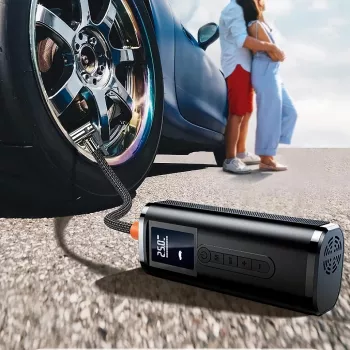
Yes—electric tire pumps work well for topping off and inflating vehicle tires, bike tires, and many sports inflatables. They use a small motor to compress air and push it through a hose into the tire, and most modern models include a digital pressure display so you can inflate to a specific PSI. These pumps are incredibly user-friendly and can be operated by anyone, making them accessible for all drivers.
Their real strength is convenience: instead of hunting for a gas-station compressor, an electric pump can live in your trunk or garage and help you handle slow leaks, seasonal pressure drops, or routine maintenance on demand. Imagine being able to inflate your tire right at home or on a roadside without the hassle of searching for a station.
For everyday situations—bringing a car tire back up a few PSI, inflating a low tire after a cold snap, or filling a bike tire—electric pumps typically perform reliably. Compact 12V models plug into a car outlet, while cordless versions run on rechargeable batteries and are especially handy when you can’t reach a power source. The ease of use of these pumps in various situations cannot be overstated, as they provide real-time pressure readings and can maintain pressure until desired levels are achieved.
Performance depends on the pump’s maximum PSI rating, airflow, and duty cycle. A high max-PSI number doesn’t always mean fast inflation, but it does indicate the pump can reach common passenger-car tire pressures without straining. Many units also include auto-stop: you set the target PSI and the pump shuts off when it reaches it, helping prevent over-inflation. This feature is particularly useful for those who may not be familiar with PSI levels, ensuring that your tires are inflated to the proper specifications without guesswork.
Electric tire pumps can be slower when you’re inflating from very low pressure, filling larger tires (like truck/SUV tires), or using a small cordless inflator with limited airflow. Battery-powered pumps may also slow down as the battery drains or if the unit overheats and needs a brief cool-down. These limitations are normal for compact compressors and don’t mean the pump “doesn’t work”—just that the job may take longer than a shop-grade compressor. Understanding these nuances can help users temper their expectations and maximize the effectiveness of their chosen electric tire pump.
Check your tire’s recommended PSI (often on the driver door jamb), start the car if you’re using a 12V plug-in pump to avoid draining the battery, and recheck the reading with a separate gauge if you want extra accuracy. For a deeper look at features like digital displays, LED lights, cordless convenience, and what to expect from a compact 150 PSI inflator, see this guide to a wireless 150 PSI tire inflator. When using an electric tire pump, always remember to check the surrounding conditions, as very cold or hot temperatures can affect performance.
For a typical passenger tire that’s only a few PSI low, many pumps take a couple of minutes. If the tire is very low or larger than average, it can take several minutes longer depending on the inflator’s airflow and heat limits. In general, having an electric tire pump on hand can save you time and ensure your vehicle remains roadworthy.










Leave a comment