
Magnetic car phone holders can work with most phone sizes, but they’re not truly “one-size-fits-all” in every situation. The biggest factors are the strength and design of the mount, where the magnet is placed, and what kind of case is on the phone.
Most magnetic mounts are designed to handle common smartphone sizes, including larger “Max/Plus” models. The potential issue isn’t the screen size—it’s leverage and weight. A heavier phone creates more pull when you hit bumps or take turns, especially on vent mounts. If the magnet is weak, misaligned, or too small, a larger phone is more likely to shift or drop.
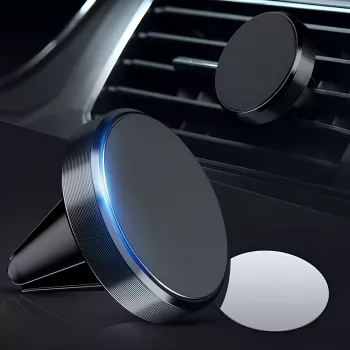
Many standard cases work fine as long as there’s a metal plate (or compatible magnetic ring) between the phone and the holder. Problems tend to show up with very thick, rugged cases or cases with textured/soft materials that prevent the phone from sitting flat against the magnet. A poor “flush fit” reduces contact, and less contact usually means less holding power.
For best results, place the metal plate or magnetic ring centered behind the phone (or slightly lower if you need to avoid the camera area). If you use wireless charging, choose a compatible ring/plate placement that doesn’t block the charging coil.
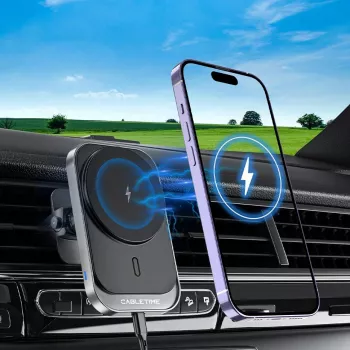
MagSafe-style magnetic holders often fit iPhone models with built-in MagSafe magnets more reliably because alignment is automatic. For non-MagSafe phones, adding a magnetic ring or plate can make the fit more consistent, but placement is key—off-center placement can cause wobble and weaker grip.
Even if the magnet holds well, the air vent itself must support the phone’s weight. Some vents are looser, angled, or thinner, which can let the mount tilt over time. For more details on getting a stable setup, see this guide to using a magnetic vent car phone holder securely.
They can if a metal plate is placed over the charging coil, which may slow charging or stop it entirely. Using a magnetic ring designed for wireless charging and positioning it correctly usually prevents issues.









Leave a comment