HomeBlogBlogDog Crate Furniture with Drawers & Divider: A Tidy Den
Dog Crate Furniture with Drawers & Divider: A Tidy Den
Dog Crate Furniture with Drawers and a Removable Divider: Comfort for Dogs, Calm for Your Space
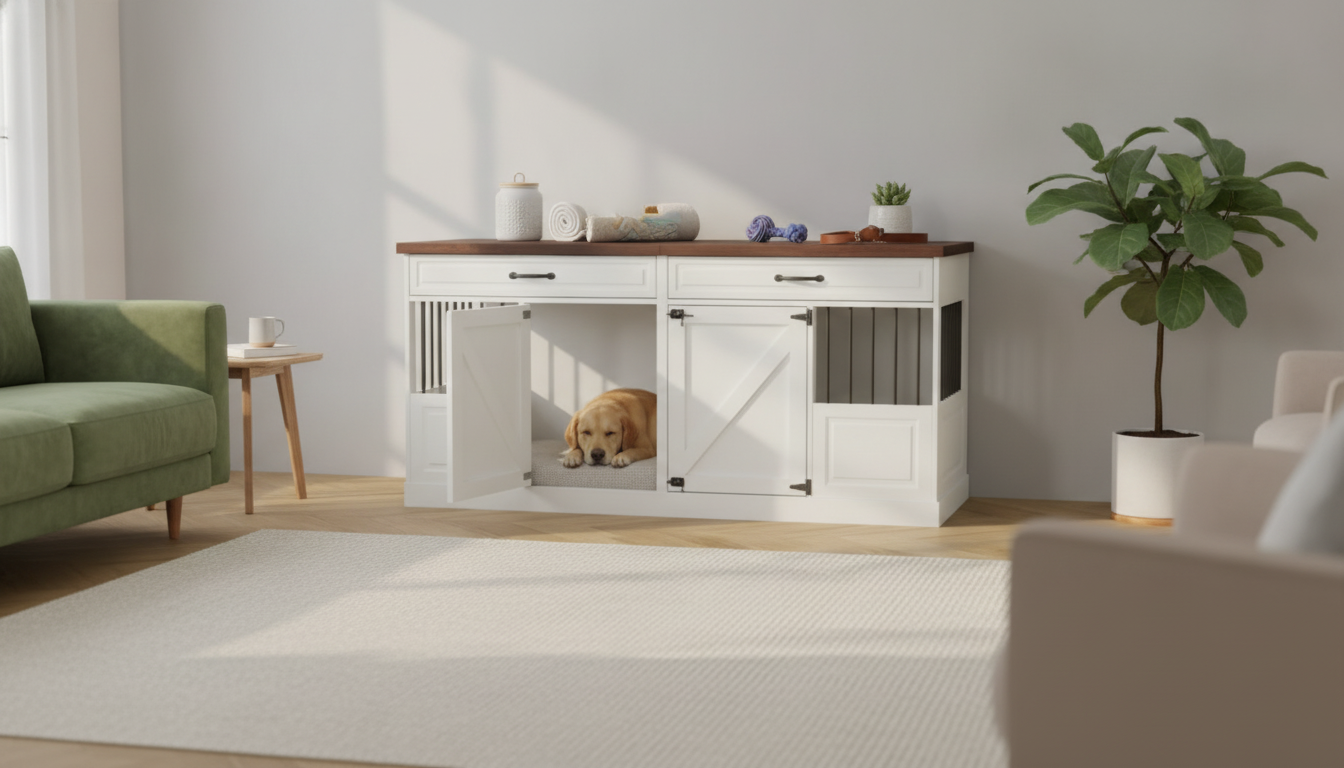
Dog crate furniture blends a secure resting spot with a piece that looks at home in a living room or bedroom. Adding drawers keeps everyday pet items close, while a removable divider helps the crate adapt as routines change—whether that’s crate training a young dog, separating two dogs, or adjusting the interior for naps versus overnight sleep. For more guidance, see Best Dog Crates, Houses & Pens Reviews… – Revain.
Choosing the right Dog Crate Furniture with Drawers can significantly enhance your living space while ensuring your pet’s comfort.
Dog Crate Furniture with Drawers provides a blend of utility and aesthetics that traditional crates lack.
Dog Crate Furniture with Drawers supports both your pet’s needs and your home’s decor.
What Makes This Style of Crate Different
With Dog Crate Furniture with Drawers, keeping supplies organized is easier than ever.
A Dog Crate Furniture with Drawers can accommodate your growing dog’s needs.
Investing in Dog Crate Furniture with Drawers is a smart choice for any pet owner.
Explore different styles of Dog Crate Furniture with Drawers to find your perfect match.
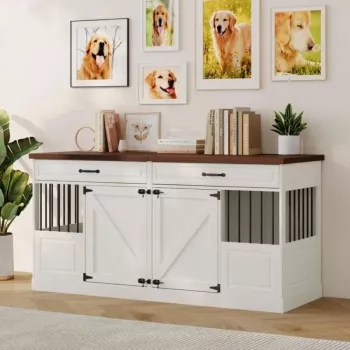
It functions as both a dog den and a furniture piece that can support décor on top (within the maker’s stated weight limits).
Drawer storage reduces clutter by keeping leashes, treats, grooming tools, and waste bags in one place.
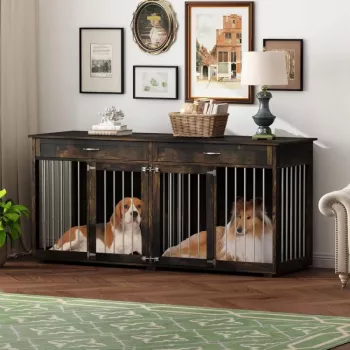
A removable divider creates two spaces or lets the interior expand when needed.
It’s often chosen for main living areas where a standard wire crate looks out of place.
Luxury Gold Ceramic Bathroom Sink — a home upgrade that pairs well with a design-forward space where furniture-style pet pieces are part of the overall look.
Dog Crate Furniture with Drawers allows for easy access to pet gear.
When Drawers Are Especially Useful
Drawers sound like a small feature—until daily life gets busy. Having a dedicated spot for pet essentials can make the crate area feel like a tidy “station” instead of a pile of gear. For further reading, see Dog Cages For Inside – A Dog Owner’s Guide – Dog Crates.
Entryway setups: store leash, harness, and wipes for quick walks.
Living room setups: keep toys and training treats out of sight but within reach.
Multi-caregiver homes: a dedicated drawer can hold meds, vet records, or feeding schedules.
Cleaner routine: a single spot for nail clippers, brushes, and paw balm helps keep grooming consistent.
How a Removable Divider Helps Day to Day
The divider is what makes a crate furniture setup feel adaptable rather than fixed. It can support training and household logistics without forcing a second crate purchase.
Crate training: a smaller space can encourage settling and reduce pacing (avoid making the area so small the dog can’t stand up, turn around, and lie down comfortably). For step-by-step guidance, see the ASPCA’s crate training resource.
Two-dog flexibility: some setups use the divider to separate dogs temporarily (confirm the crate is intended for this use and that both dogs have adequate space and ventilation).
Adapting to growth: expand the interior as a puppy grows or as an adult dog gains confidence and routine.
Better housekeeping: confine muddy paws to one side while cleaning, then remove the divider again.
Dog Crate Furniture with Drawers can seamlessly blend into your home design.
Sizing and Fit: Getting the Interior Right
Furniture-style crates can look substantial on the outside, but the real comfort comes down to the internal dimensions. Before buying, measure the dog and compare those numbers to the listed interior space, not just the exterior furniture footprint.
Measure the dog from nose to base of tail and from floor to top of head/ears when standing; add a little extra room for comfort without making it so large that housetraining becomes harder.
Check the listed internal dimensions (not only the external furniture dimensions) to ensure the dog can stand, turn, and fully stretch out.
For two dogs, confirm the design supports safe separation and that each side meets the same comfort requirements.
Consider door placement and swing clearance so the crate can be accessed without moving nearby furniture.
Quick checklist before choosing a crate furniture setup
What to check
Why it matters
What to look for
Internal dimensions
Determines real usable space
Dog can stand, turn, and lie fully stretched
Divider design
Controls flexibility and separation
Secure mounting points; easy removal; no sharp edges
Ventilation and visibility
Supports comfort and calmer settling
Adequate airflow on multiple sides; clear sight lines
Drawer construction
Affects durability and smooth daily use
Stable runners; easy-pull handles; enough depth for supplies
Door latches
Safety and escape prevention
Secure, dog-proof latches that don’t pinch paws
Floor protection
Reduces slipping and noise
Compatible with a crate mat/bed; optional tray or liner support
Placement Tips for a Calmer Crate Routine
Choose a low-traffic spot where the dog can still see the family, such as the edge of a living room.
Avoid direct heat sources, strong drafts, or constant sunlight that can overheat the interior.
If using the top surface for décor, keep items stable and avoid anything breakable that could fall if the dog bumps the crate.
Leave enough clearance to open drawers fully without blocking walkways.
Materials, Durability, and Safety Details to Look For
Because this crate lives where people live, build quality matters as much as comfort. A well-made piece stays quieter, aligns better over time, and is easier to keep fresh.
Make your living space more functional with Dog Crate Furniture with Drawers.
Using Drawers Without Adding Stress
Dog Crate Furniture with Drawers not only serves as a dog house but also enhances your home.
Care and Cleaning
A Practical Option for Larger Dogs
As a general starting point for responsible pet decisions and household fit, the American Veterinary Medical Association (AVMA) offers helpful guidance for pet owners.
FAQ
Can two dogs use a crate with a removable divider?
Only if the crate is designed for safe separation and each side provides enough room and ventilation. Introduce gradually and supervise at first, and avoid crating dogs together if either shows stress or resource guarding.
Should the divider be used during crate training?
Often yes—set the space so the dog can stand, turn, and lie down comfortably, then expand the area as the dog grows or becomes reliably calm and clean in the crate.
What should be stored in the drawers?
Keep frequently used, lightweight pet items like treats, grooming tools, waste bags, wipes, and a spare leash. Avoid heavy items that strain hardware or anything that makes the dog overly excited near rest time.










Leave a comment