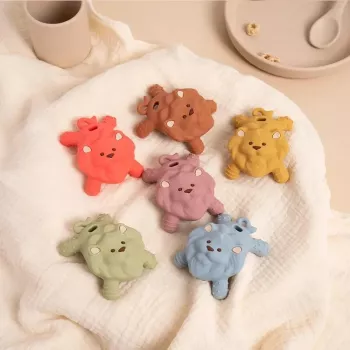
Teething can bring sore gums, extra drool, and fussy moments. A lion-shaped teether offers a friendly design that encourages babies to grasp, mouth, and explore while providing gentle gum relief. This guide covers what matters most—materials, safety details, cleaning, and when to use a teether—so soothing stays simple and reassuring.
Why a Lion Shape Can Be Easier for Babies to Use
Babies don’t just “chew”—they experiment with angles, pressure, and hand positions. A lion-inspired design can make that trial-and-error easier in a few practical ways:
- Hand-friendly contours: Rounded edges and shaped “mane” or face details can create natural grip points for small hands.
- Mouthing variety: Different angles (ears, cheeks, edges) let babies press the teether where gums feel most sensitive.
- Engagement: A familiar animal shape can hold attention longer during soothing, especially when baby is upset.
- Helps coordination: Reaching, holding, and bringing the teether to the mouth supports early hand-to-mouth control.
That combination—easy to hold, interesting to explore, and satisfying to mouth—often makes an animal teether a go-to item in the diaper bag.
What to Look for in a Baby Teether (Safety and Comfort Basics)
Not all teethers are built the same. Before offering any teether, check a few non-negotiables for comfort and safer use:
- One-piece or securely constructed design: Avoid parts that can detach, split, or crack with chewing.
- Size that prevents choking: A teether should be large enough that it cannot fit fully into the mouth.
- Smooth seams and no sharp edges: Look for molding lines, corners, or rough spots that could irritate gums.
- Material transparency: Choose products with clear info on what they’re made from and how they’re intended to be used.
- Texture balance: Enough texture for gum massage without being rough or abrasive.
- Age-appropriate use: Match the teether to the baby’s stage—early teething needs gentle pressure, while later stages may involve stronger chewing.
Quick Teether Checklist
| Check |
What to confirm |
Why it matters |
| Construction |
No loose parts; no peeling; no rattly inserts |
Reduces choking and breakage risks |
| Size |
Too large to be swallowed; easy to hold |
Safer mouthing and better grip |
| Surface |
Smooth edges; gentle texture |
Comfortable gum pressure |
| Cleaning |
Simple to wash; dries fully |
Helps limit germs and odors |
| Cold use |
Chill-only if recommended; never frozen solid |
Avoids gum injury from over-cold items |
For additional safety context, the U.S. Food & Drug Administration has guidance on avoiding risky teething items like necklaces and similar accessories (FDA teething safety information).
How to Use a Teether for Teething Relief
Even the best teether works better with a simple routine. These habits can help keep soothing comfortable and consistent:
- Start with clean hands and a clean teether: Especially for younger babies who drop items often. The CDC has clear basics on effective handwashing (CDC handwashing guidance).
- Offer during typical teething windows: After naps, before feeds, or when drooling and chewing pick up.
- Use short soothing sessions: Let baby chew for a few minutes, then take a break to avoid irritation from nonstop pressure.
- Chilled, not frozen: If the product allows it, chilling can calm gums. Avoid freezing hard—extreme cold can be too intense on delicate gum tissue.
- Supervise use: Keep teethers as a “nearby adult” item, particularly when baby is very tired or lying down.
If you’d like a pediatric-focused overview of what’s normal during teething, the American Academy of Pediatrics offers practical tips on soothing and timing (AAP teething basics).
Cleaning and Care Tips to Keep It Fresh
Teethers take a lot of wear—saliva, lint, floors, and repeated chewing—so basic upkeep matters. A few simple steps can help the teether stay pleasant and ready to use:
- Wash regularly: Use warm water and mild soap, then rinse thoroughly to remove any residue.
- Dry completely: Air-dry so moisture doesn’t linger in creases or textured areas.
- Inspect often: Watch for tears, cracks, stickiness, or discoloration; replace if damage appears.
- Avoid harsh chemicals: Strong cleaners can degrade some materials or leave lingering residues.
- Storage: Keep it in a clean, dry container or designated spot to reduce lint, pet hair, and surface germs.
When Teething Starts and What Else Can Help
Many babies begin teething around 4–7 months, though earlier or later can still be typical. Because baby behavior changes quickly in the first year, it helps to know what’s commonly linked to teething—and what may signal something else.
- Common signs: Drooling, chewing, gum rubbing, mild fussiness, and disrupted sleep.
- When to look beyond teething: Fever or significant illness usually points to another cause rather than teeth alone.
- Complementary comfort: Gentle gum massage with a clean finger, extra cuddling, and (if appropriate) a cool washcloth can help.
- Medication caution: Follow pediatric guidance for pain relievers, and avoid numbing gels unless a clinician specifically recommends them.
- Call a pediatrician if: Baby has a high fever, persistent diarrhea/vomiting, extreme lethargy, or symptoms that don’t match typical teething patterns.
Shop In-Stock Baby & Care Picks
FAQ
Can a baby sleep with a teether?
Teethers are best used during supervised wake time. Avoid leaving a teether in the crib unattended—especially overnight—and remove it once baby falls asleep.
Should a teether be chilled or frozen?
If the product allows it, a chilled teether can feel soothing on tender gums. Skip freezing solid, since very cold surfaces can irritate gums; offer brief sessions and watch baby’s comfort.
How often should a teether be replaced?
Replace a teether as soon as you notice cracks, tears, stickiness, discoloration, or any change in shape. It’s also time to replace if it holds a persistent odor or can’t be cleaned fully.
Recommended for you













Leave a comment