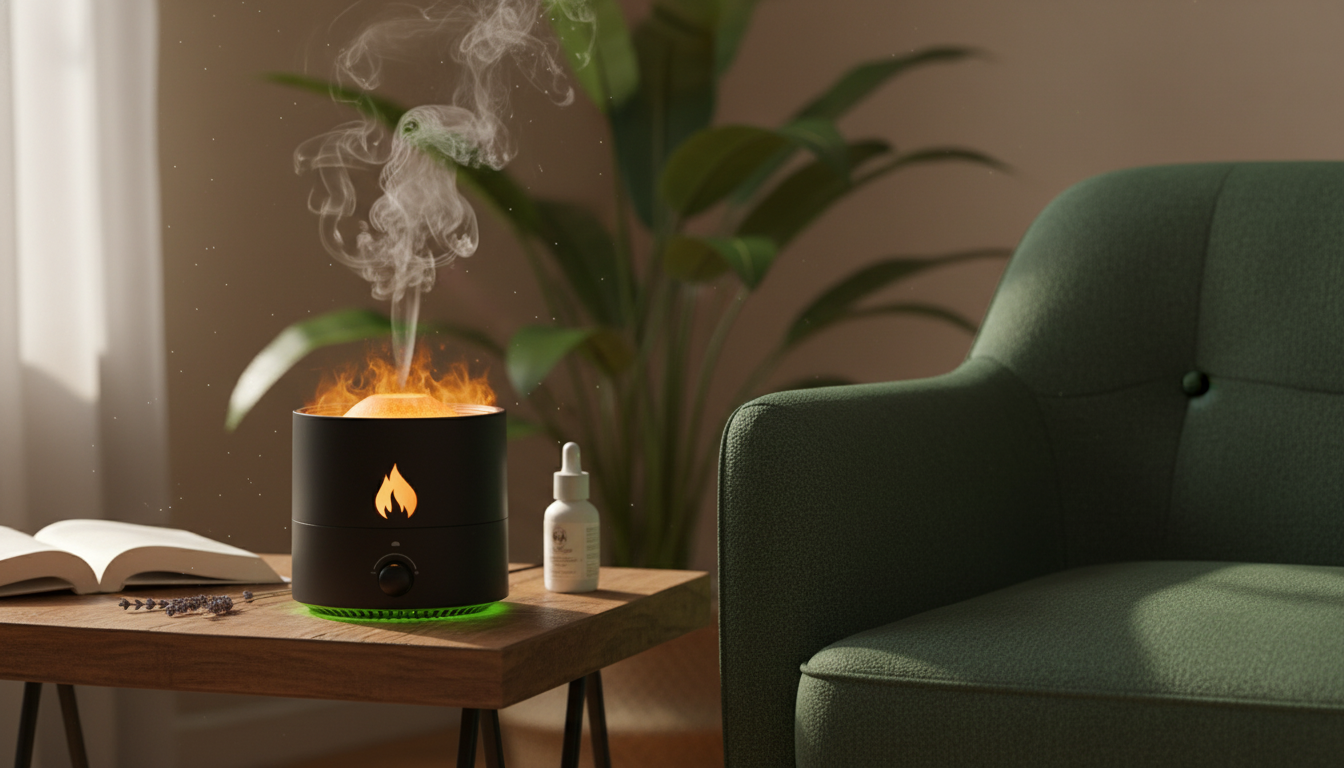
Dry indoor air and lingering odors can make bedrooms, offices, and nurseries feel less comfortable than they should. An ultrasonic air humidifier that also works as an essential oil diffuser helps add fine mist for moisture while dispersing gentle fragrance—supporting a calmer, fresher-feeling space with simple daily maintenance. For broader indoor air guidance, the U.S. EPA’s introduction to indoor air quality is a helpful reference point.
Ultrasonic models use high-frequency vibration to turn water into a cool, fine mist—without heating the tank. That simple approach makes them popular for sleep spaces and desks where a quiet, low-fuss device feels like an everyday upgrade.
Humidifiers can be useful during seasonal dryness, but it’s still smart to avoid over-humidifying. The Mayo Clinic overview on humidifiers highlights both potential benefits and the importance of keeping the device clean.
A humidifier-diffuser is most noticeable when the air feels tight, the room smells a little “stale,” or HVAC runs frequently. It’s also an easy way to build a predictable evening routine—fill, choose a low setting, and let the mist run while you unwind.
For general tips on keeping indoor environments healthier, the CDC’s indoor air resources provide practical context.
Not all humidifier-diffusers feel the same in day-to-day use. The best pick is often the one that’s easiest to live with: controllable mist, predictable run time, and cleaning access that doesn’t feel like a chore.
| Need | Why it matters | What to verify |
|---|---|---|
| Quiet nights | Helps avoid sleep disruption | Low-noise operation and stable placement |
| Less frequent refills | Convenience for overnight use | Tank size and estimated run time |
| Safer daily use | Prevents running dry unnoticed | Automatic shutoff on low water |
| Cleaner mist experience | Reduces buildup and odors | Simple cleaning access and clear maintenance steps |
| Aroma you can control | Avoids overpowering fragrance | Adjustable diffusion/mist settings |
Essential oils can make a room feel more inviting, but only when used with a light hand and compatible products. A few careful habits also help protect the diffuser’s internal parts from residue and clogging.
Where you place the humidifier matters almost as much as the settings. Good placement reduces condensation, protects furniture, and helps the mist spread evenly through normal room airflow.
| Type | Mist temperature | Maintenance considerations | Best for |
|---|---|---|---|
| Ultrasonic | Cool | Regular cleaning; consider distilled water | Bedrooms, quiet spaces, multi-use aroma + moisture |
| Warm mist | Warm/steam | Descaling; higher energy use; safety caution | Cold seasons, users who prefer warm mist |
| Evaporative | Cool | Filter/wick replacement; fan noise | Larger areas, users who prefer filter-based humidity control |
If you want a single device that supports moisture and ambiance, the Ultrasonic Air Humidifier & Essential Oil Diffuser is designed for everyday comfort. It’s a practical pick for bedrooms, desks, and small-to-medium living spaces where quiet operation and simple routines matter.
For an added touch of comfort during long work sessions, pairing a fresher-feeling workspace with easy, polished style can help the day feel more put-together—see the Elegant Silk Print Shirt for Women – Office & Casual Wear.
Yes, as long as the unit is designed for oils and you clean it regularly. Use a small amount to start, avoid heavy oils that can leave residue, and run occasional water-only cycles to help limit buildup.
Distilled or demineralized water can reduce mineral buildup and visible white dust, especially in hard-water areas. If you use tap water, plan on more frequent cleaning and descaling per the manufacturer’s directions.
If you use the unit often, empty it daily and clean it on the schedule recommended in the manual (commonly several times per week). Cleaning may need to be more frequent when using essential oils or hard water.













Leave a comment