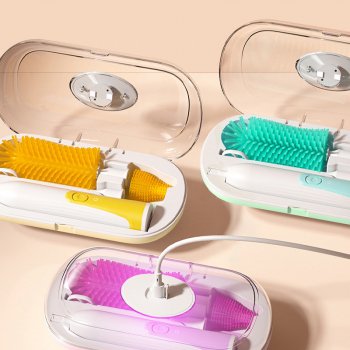
Yes—an electric bottle cleaning brush can be safe for glass baby bottles and silicone nipples when it’s used with the right brush head, gentle pressure, and a mild, baby-safe soap. The main risks come from stiff bristles, high speed, and scrubbing too aggressively, which can scratch glass, cloud the surface over time, or abrade silicone nipples.
Glass is durable, but it can still get micro-scratches if a brush is too abrasive or if grit gets trapped in the bristles. Choose a soft nylon or foam head (avoid metal or extra-stiff bristles), add warm soapy water first to lubricate, and keep the brush moving so it doesn’t grind in one spot. Use the lowest effective speed and let the motor do the work—pressing hard doesn’t clean better and can increase wear.
After cleaning, rinse thoroughly and inspect the bottle for chips or cracks, especially around the rim and base. If you notice chipping, retire the bottle for safety.
Silicone is softer than glass and can tear or develop tiny surface nicks if scrubbed too aggressively. Use a dedicated, softer nipple brush head if available, and keep the speed low. Focus on gentle passes rather than force, and avoid twisting the brush deep into the nipple opening. If a nipple looks sticky, cloudy, torn, or has a persistent odor, replace it—silicone parts are consumables.
For a deeper walkthrough on choosing brush types, avoiding scratches, and cleaning tricky parts safely, visit the main guide here.
Yes. After washing and thoroughly rinsing off soap, you can sterilize bottles and nipples using the method recommended by the manufacturer (steam, boiling, or a sterilizer). Make sure all parts are fully exposed and not nested so sterilization can reach every surface.








Leave a comment