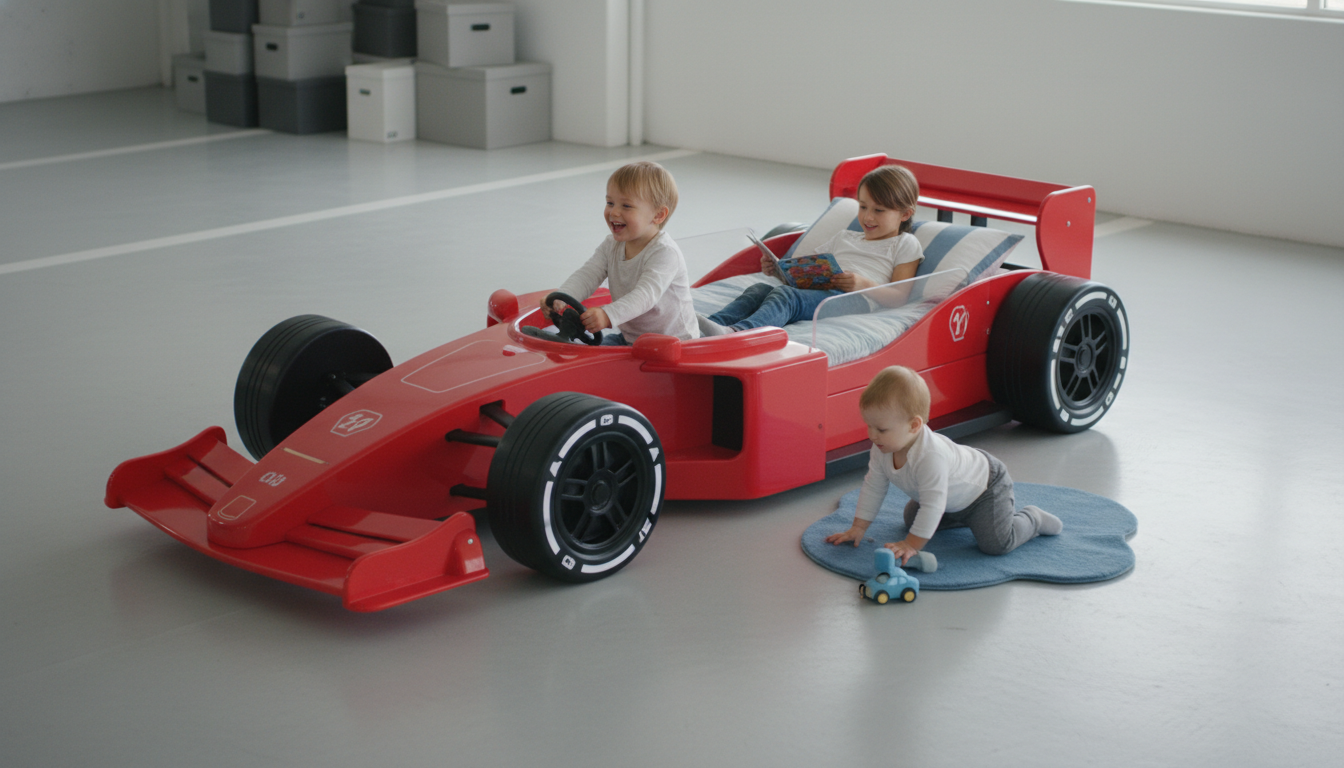
Most kids are ready for a race car bed between ages 2 and 5, depending on their size, sleep habits, and whether they’ve transitioned safely out of a crib. A common sweet spot is around age 3, when toddlers often move into a “big kid” bed and are excited by fun designs that make bedtime feel like an upgrade.
If a child is younger than 2, a race car bed usually isn’t the best fit because many toddlers still need the containment and higher guardrails of a crib for safer sleep. On the other end, many race car beds are sized for toddlers or twin mattresses, meaning older kids can still use them if the bed is a twin and has a sturdy frame—often through ages 8 to 10 (and sometimes beyond) as long as weight limits and dimensions work.
Age matters, but readiness matters more. A race car bed tends to work well when your child can climb in and out independently, follows basic bedtime rules (staying in bed most of the night), and no longer needs a fully enclosed sleep space. Potty training can also be a practical factor—easy exits help with nighttime bathroom trips.
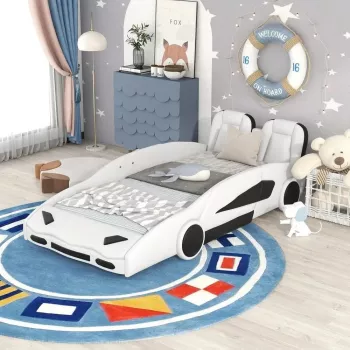
Look for a low-to-the-floor design, secure guardrails, rounded edges, and a stable base that won’t wobble during play. Confirm the mattress size (many are twin) and check the manufacturer’s recommended age range and weight capacity. If your child is an active sleeper, prioritize higher side rails and a snug mattress fit to reduce gaps.
If longevity is the goal, a twin race car bed is typically the better choice over smaller toddler-only models. A twin frame can handle growth spurts and makes it easier to find standard bedding, while still delivering that “race day” excitement kids love.
For more details on fit, safety features, and setup pointers, see the full guide here: https://gskbuy.com/guide-twin-race-car-bed-with-wheels-fit-safety-setup-tips/.
A twin race car bed typically lasts longer and fits standard twin mattresses and bedding. A toddler version can feel cozier for small children, but many kids outgrow it sooner.











Leave a comment