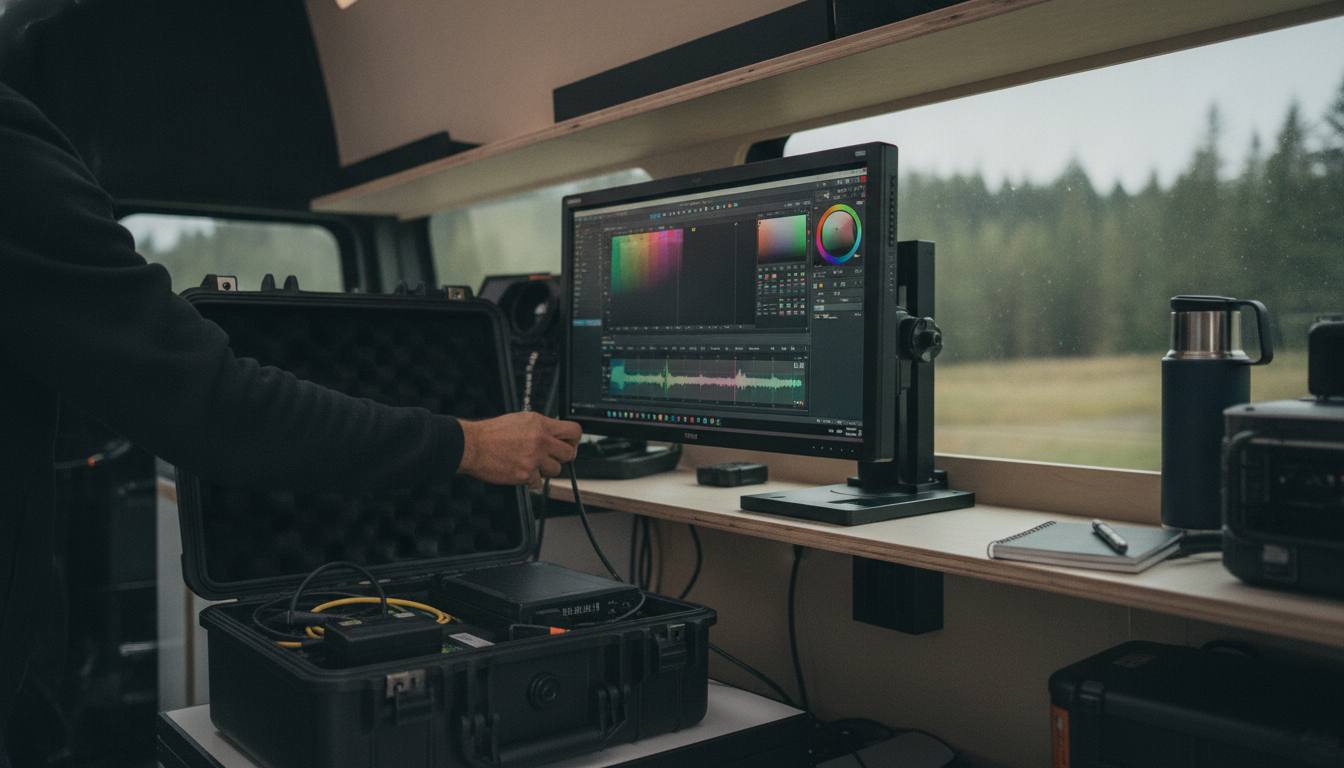
The Sony PVM-X2400 is a 24-inch professional reference monitor built for critical color work in broadcast, film, and post-production. It’s part of Sony’s TRIMASTER series, meaning it’s designed to show an image with tight control over color accuracy, contrast, and shadow detail so editors and colorists can make confident decisions that translate to other displays.
Its headline capability is 4K HDR monitoring in a compact 24-inch size. That makes it useful on set, in edit bays, and in grading suites where space matters but precision can’t be compromised. The panel and processing are tuned for evaluating highlights, midtones, and near-black detail—areas where consumer screens often clip or crush information.
Because it’s a reference monitor, the PVM-X2400 is meant for judging the “truth” of the signal rather than making footage look flattering. It supports professional workflows where consistent standards are required, including HDR evaluation and matching across multiple displays. In practical terms, it helps reduce surprises when footage is delivered to different platforms, whether that’s broadcast, streaming, or cinema-style finishing.
For creators working with high-end capture—such as 4K HDR camera systems, aerial platforms, or color-managed pipelines—a monitor like this can be the difference between guessing and verifying. If you’re interested in how real-world 4K HDR image quality is evaluated in demanding scenarios, see the related guide here: 4K HDR Hasselblad drone real-world quality and flight time.
Note that reference monitors like the PVM-X2400 typically prioritize accuracy and signal handling over entertainment features. They’re also commonly integrated with calibration tools and professional I/O hardware, making them a better fit for production environments than casual desktop use.
A reference monitor is engineered for consistent, standards-based color and luminance accuracy, so what you see is dependable for professional delivery. A regular computer monitor may look great, but it’s usually not built to hold tight tolerances across HDR, grayscale tracking, and uniformity.












Leave a comment