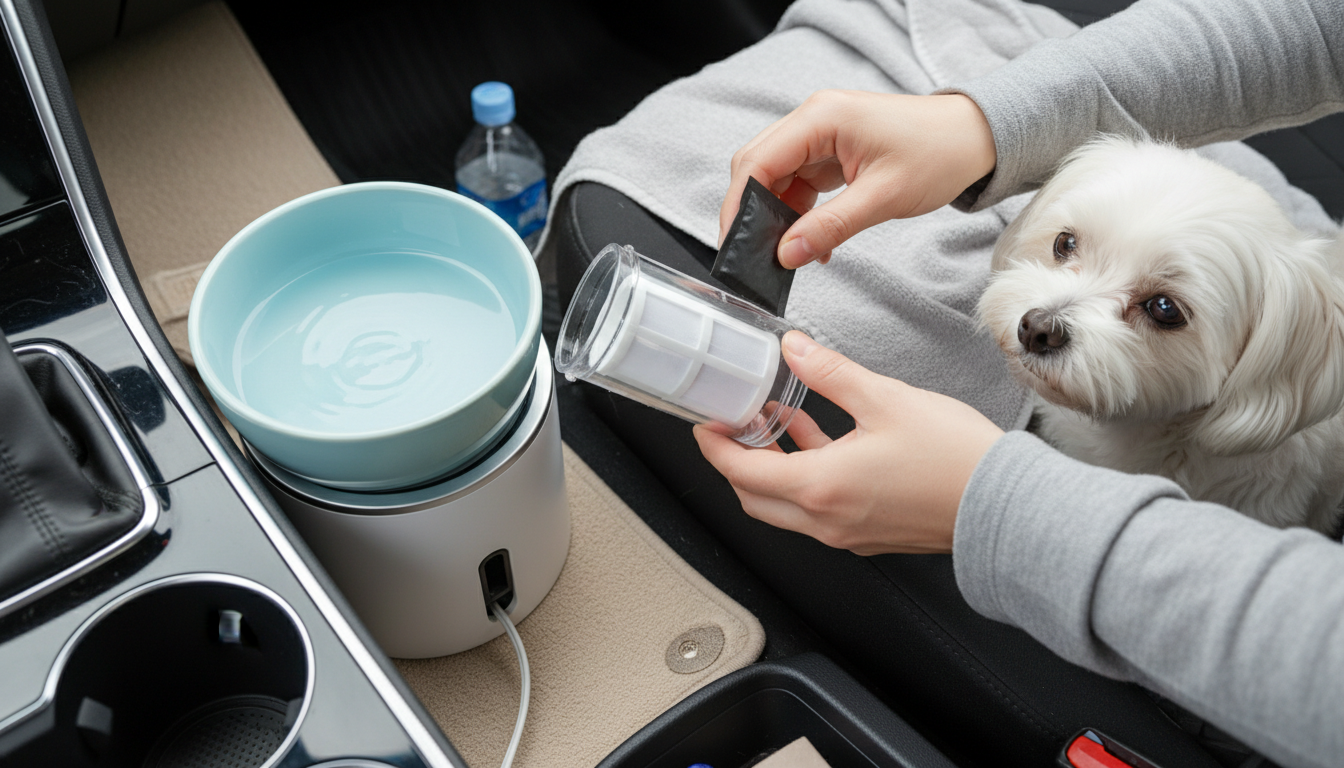
Filters aren’t strictly required for a pet water fountain to function, but they’re often what makes the water noticeably cleaner, better tasting, and easier to maintain between deep cleanings. If the goal is to keep water fresh while reducing hair, crumbs, and odor, a filter is one of the simplest upgrades a fountain can have.
A good fountain filter typically does two jobs: it traps physical debris (like fur and food particles) and helps reduce tastes and smells. In many homes, that matters because pets frequently drop kibble near the bowl, shed into the water, or stir up dust. A filter can also help slow down slime and residue buildup by keeping the water clearer as it circulates.
Filters are especially helpful if:
Going filter-free can work if you’re consistent with fountain care. Without a filter, you’ll generally need to rinse and refresh water more frequently, clean parts more often, and watch closely for debris collecting in the pump area. Some pets also become pickier if the water starts tasting stale, even when it still looks fine.
Even with filtration, fountains still need routine cleaning to prevent film, mineral scale, and hidden buildup in crevices and the pump. Filters mainly extend the “fresh” window between cleanings—they don’t eliminate maintenance. For step-by-step fountain care and cleaning tips, see the full guide here: https://gskbuy.com/guide-2-8l-automatic-pet-water-fountain-care-cleaning-tips/.
Most fountains do best with a quick rinse and refill every few days and a deeper cleaning about once a week, depending on how many pets use it. If you see slime, debris, or reduced flow, clean it sooner.












Leave a comment