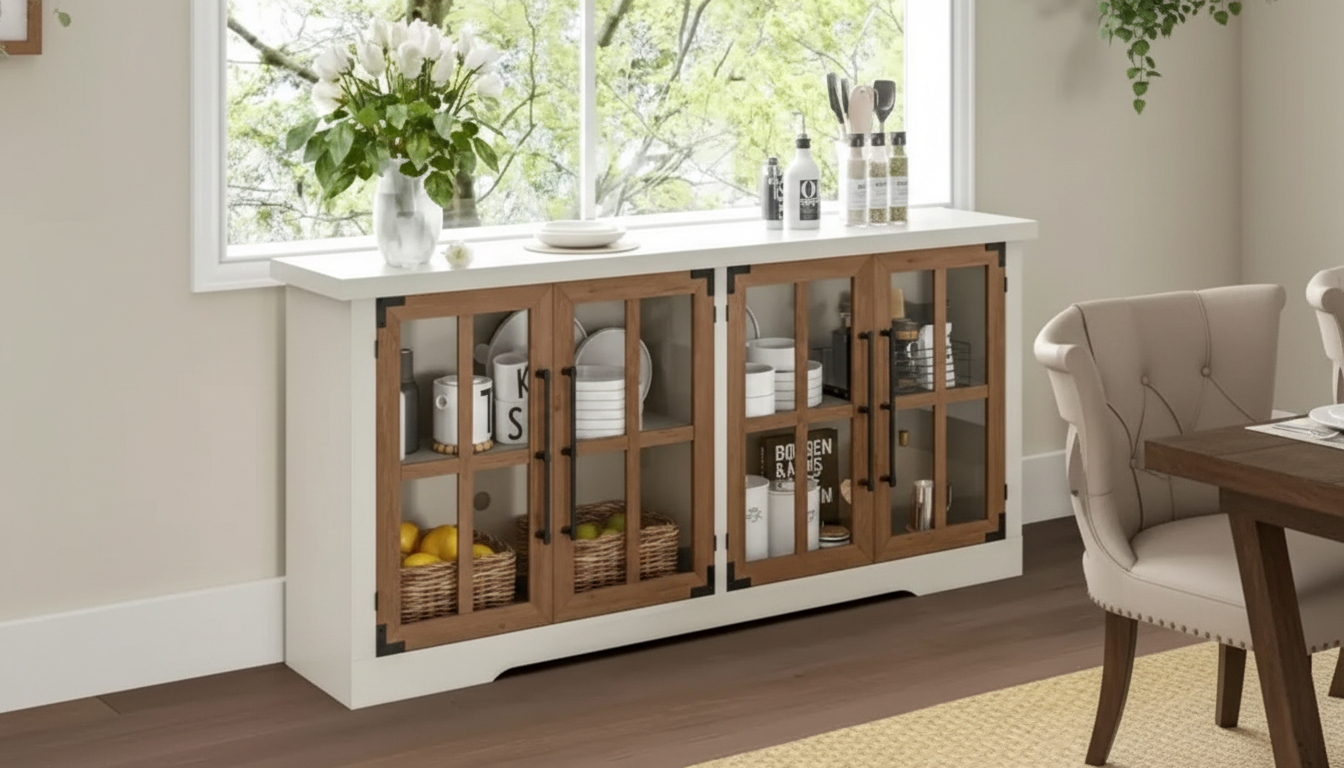
A modern farmhouse sideboard balances clean lines with cozy, lived-in character—adding storage, display space, and a strong focal point to dining rooms, kitchens, and living areas. This 63-inch cabinet pairs glass-door visibility with the flexibility of an adjustable shelf, making it easy to organize serveware, bar essentials, or everyday clutter without hiding everything away.
Why this style works in real homes
- It blends warm farmhouse character with a more streamlined, modern silhouette—easy to mix with contemporary, rustic, or transitional décor.
- Glass doors keep the room feeling lighter than solid-front storage while still protecting items from dust.
- A wide 63-inch footprint creates strong visual balance under wall art, a mirror, or a TV without looking undersized.
At-a-glance highlights
- 63″ wide sideboard profile suited to dining walls, open-concept kitchens, and living rooms that need storage without bulky uppers.
- Glass doors for showcasing dishes, glassware, books, or décor while keeping a tidy look.
- Adjustable shelf to accommodate taller items such as pitchers, small appliances, or board games.
- Works well as a buffet, credenza, coffee bar station, or media console alternative (depending on room layout).
Quick fit and placement checklist
| Placement area |
What to measure |
Comfortable clearance |
Notes |
| Behind dining table walkway |
Wall-to-table distance |
36–48 in |
Keeps traffic flow comfortable while doors can open without crowding |
| Kitchen coffee/bar zone |
Counter nearby + outlets |
24–36 in |
Plan a small appliance zone and cord routing |
| Living room accent wall |
Distance to seating |
18–24 in |
Helps maintain an airy feel around the cabinet |
| Entry or hallway |
Narrowest passage width |
36 in minimum |
Avoid tight corridors where glass doors may be at risk |
What the glass doors do better than solid doors
- They create a “display-ready” zone for favorite pieces (stoneware, decanters, collectibles) without open-shelf dust buildup.
- They improve visual organization by encouraging intentional grouping—baskets, matching sets, or curated stacks.
- They help smaller rooms feel less heavy compared with full solid cabinetry.
- Tip: Use matching bins or neutral backdrops inside to keep the look calm and cohesive.
How to use the adjustable shelf for smarter storage
- Set the shelf higher to fit tall pitchers, vases, or countertop appliances that need occasional access.
- Set it lower to create two balanced tiers for plates, bowls, and serving platters.
- Reserve one section as a “drop zone” for entertaining: napkins, candles, coasters, and bottle openers.
- Keep heavier items lower to improve stability and day-to-day usability.
Room-by-room styling ideas
- Dining room buffet: Center a large framed piece or mirror above; add a pair of lamps for symmetry and warm lighting.
- Kitchen coffee bar: Place a tray on top for mugs and syrups; store beans, filters, and extra cups behind glass for a tidy look.
- Living room credenza: Mix books and décor inside the glass doors; keep remotes and cables organized in opaque bins.
- Home office overflow: Use it for paper storage, printer supplies, and reference books while maintaining a polished backdrop.
Sizing guidance for a 63-inch sideboard
- Pairing with dining tables: A sideboard often looks best when it’s shorter than the table length or visually balanced with it—especially in open layouts.
- Wall proportion: Allow breathing room on both sides, particularly if the cabinet is centered under art or a TV.
- Door swing planning: Confirm nearby furniture won’t interfere with opening glass doors comfortably.
- Serving station setup: Keep the top surface clear enough for platters, a drink tub, or a simple bar lineup.
For circulation and work-zone planning, general clearance guidelines from organizations like the National Kitchen & Bath Association (NKBA) can be a helpful reference point when placing storage near pathways or prep areas.
Care tips for glass-front cabinets
- Use a microfiber cloth to reduce streaking and keep glass looking crisp under ambient lighting.
- Avoid placing overly wet items inside; keep drinkware dry to prevent moisture marks.
- Use felt pads or liners under stacked dishes to reduce clinking and scuffs.
- For family-friendly rooms, keep fragile display items higher and heavier items lower.
If the goal is an updated farmhouse look (less rustic, more refined), current styling guidance seen in design publications like Architectural Digest often leans toward simpler silhouettes, quieter finishes, and intentional décor groupings behind glass.
Product options in stock
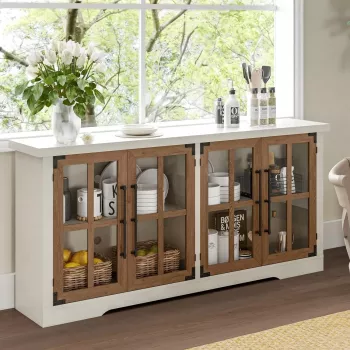
If you want one piece that handles both everyday organization and a curated display zone, the cabinet below is a practical, ready-to-ship option:
Looking to round out other rooms while coordinating finishes across the home? These additional items are also currently available:
FAQ
How big can your sideboard be in modern?
A modern sideboard can be as large as your wall and traffic flow allow—aim for comfortable walkways (often around 36 inches or more) and leave a little “breathing room” on each side so it doesn’t feel crammed. Also plan for door swing so glass doors can open fully without hitting nearby chairs or stools.
Is Modern farmhouse going out?
Modern farmhouse isn’t disappearing so much as evolving toward cleaner lines, less distressing, and more muted finishes. Keeping it current is usually about mixing farmhouse warmth (wood tones, simple profiles) with contemporary elements (sleeker lighting, minimal décor, and curated display).
Recommended for you












Leave a comment