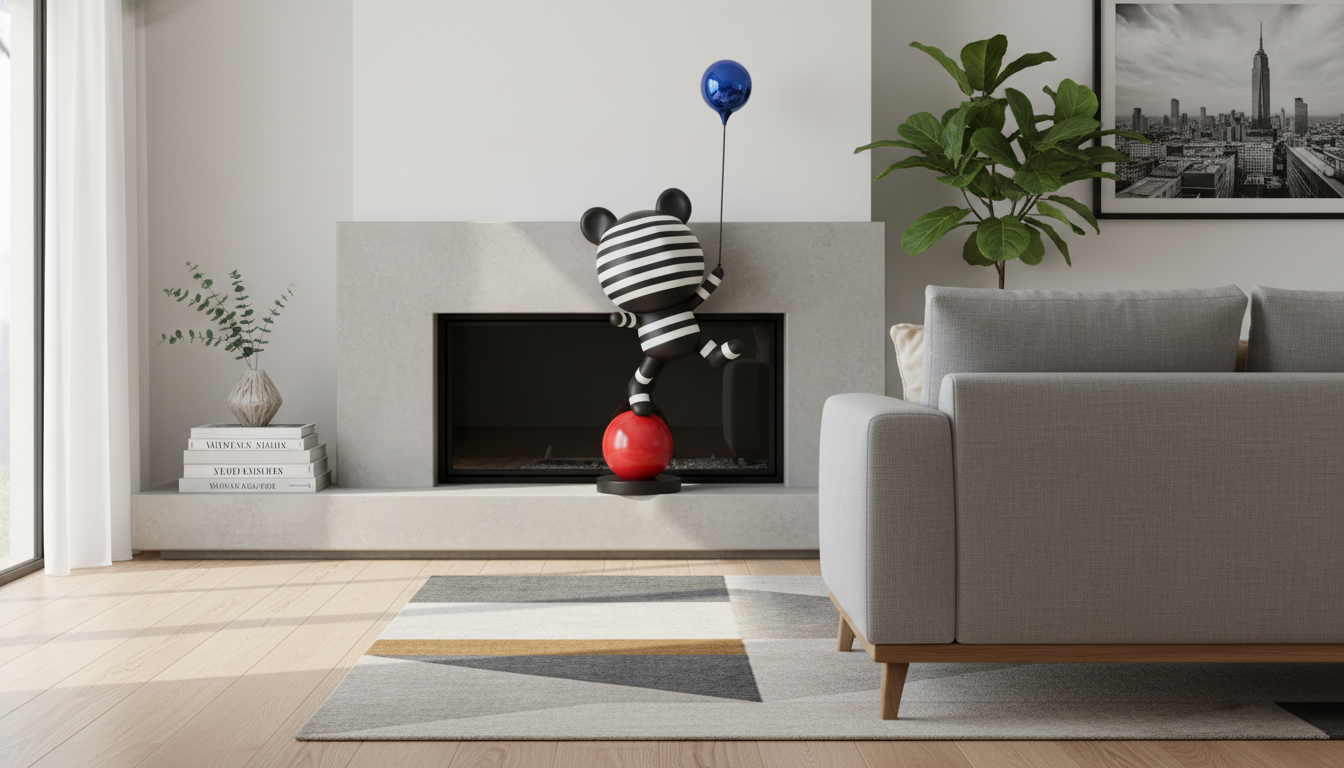
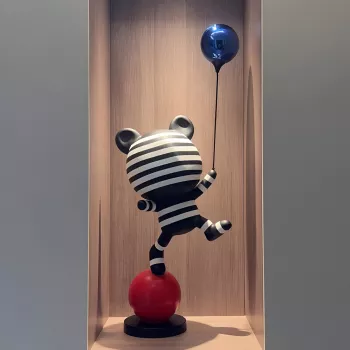
Acrobatic bear sculptures bring a sense of motion and playful balance to modern interiors. Made from resin for crisp detail and durable display, these pieces work as conversation-starting accents on consoles, shelves, and coffee tables—especially in spaces that benefit from a sculptural focal point without overwhelming the room.
If you’re looking for a statement object that feels contemporary yet approachable, Creative Acrobatic Bear Resin Sculptures for Modern Home Decor offers that “gallery moment” effect while still fitting naturally into everyday styling.
Unlike static figurines, an acrobatic pose adds visual rhythm—your eye follows the curve of the body, the balance point, and the implied movement. That sense of action can make even a small corner feel designed rather than simply filled.
For a more elevated look, pair sculptural decor with one “luxe” material elsewhere in the room—metallic accents, stone surfaces, or a standout fixture like the Luxury Gold Ceramic Bathroom Sink in a bathroom or powder room that leans modern-glam.
Resin is popular in contemporary decor because it captures fine details and clean edges that look intentional in minimalist and modern spaces. It’s also generally easier to place than heavier materials, which matters when styling floating shelves or narrow ledges.
For general object-care best practices (especially when it comes to dusting and safe storage), the Smithsonian’s guidance is a helpful reference: Smithsonian: Caring for Your Treasures.
| Consideration | Why it matters | Practical tip |
|---|---|---|
| Finish | Affects how the piece reflects light and reads against walls | Matte works well in minimalist rooms; glossy pops on darker shelves |
| Weight & stability | Prevents tipping when placed on narrow surfaces | Use museum gel or discreet putty on slick tabletops if needed |
| Surface durability | Protects against scuffs and dust build-up | Dust with a microfiber cloth; avoid abrasive sponges |
| Placement conditions | Heat and UV can degrade some finishes | Keep away from radiators and strong direct sun |
Placement is what makes a sculptural accent feel “designed” rather than random. The goal is to give the figure enough negative space so the pose is readable, while anchoring it with one or two supportive items.
| Room | Best placement | Pairs well with | Lighting tip |
|---|---|---|---|
| Entryway | Console table corner | Wood tray, slim vase | Warm lamp light to soften shadows |
| Living room | Open shelf or credenza | Books, ceramic bowl, greenery | Aim a small picture light above for depth |
| Office | Side cabinet or bookcase | Metal pen cup, neutral notebooks | Use diffused task lighting to reduce glare |
| Bedroom | Dresser top or nightstand | Linen box, simple frame | Keep light indirect for a relaxed mood |
The easiest way to make a sculptural accent look intentional is to treat it as the “motion” element and keep the supporting cast quieter. Think simple volumes, restrained colors, and just enough contrast to make the silhouette stand out.
Neutral palettes are especially forgiving: the form becomes the focal point, and small tweaks—like swapping a white tray for a black one—can shift the entire mood without changing the sculpture itself.
When using any household cleaning product near decor, follow basic chemical-handling precautions—especially around ventilation and surface compatibility. A practical overview is available from the U.S. Consumer Product Safety Commission: CPSC: Household Chemical Safety.
Creative Acrobatic Bear Resin Sculptures for Modern Home Decor is designed to bring movement and character to contemporary rooms. It’s best used as a focal object on a shelf, console, or tabletop with minimal surrounding clutter, and it shines in neutral palettes where form and silhouette take center stage.
Yes. Resin sculptures are commonly made by casting resin into molds or building up layers, then letting the material cure before sanding and finishing. Cure times vary by resin type, and basic safety—like gloves and good ventilation—helps reduce exposure to fumes and skin irritation.












Leave a comment