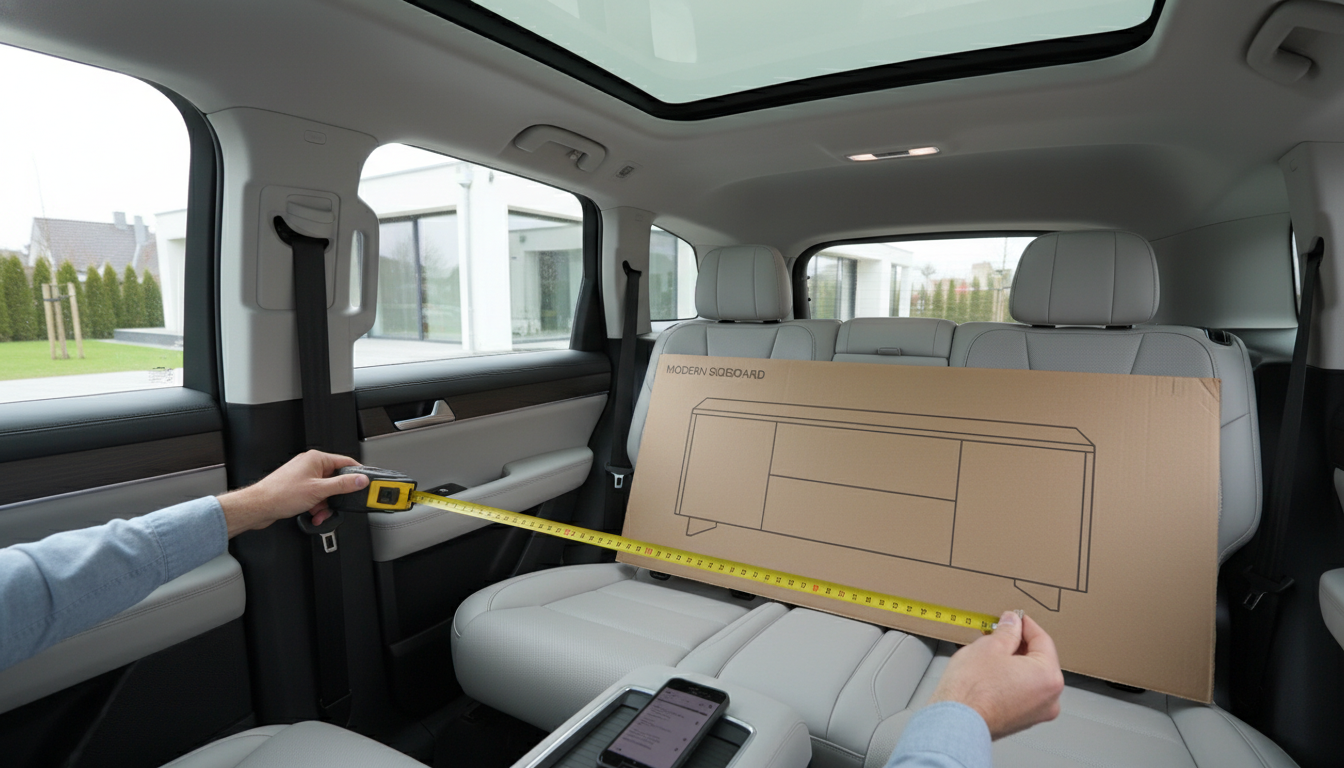
In modern interiors, a sideboard can be surprisingly large—as long as it looks intentional, stays proportional to the wall, and preserves comfortable walkways. “Modern” is less about a strict size limit and more about clean lines, balanced negative space, and practical clearance around the piece.
Most modern sideboards fall between 54–84 inches wide, about 16–20 inches deep, and roughly 28–36 inches tall. A 63-inch sideboard is a popular “sweet spot” because it offers generous storage without visually dominating an average dining or living room wall. If the room is large or the wall is long, 72–84 inches can feel even more tailored and architectural.
A practical modern guideline is to keep the sideboard around 60%–75% of the wall width it sits on. This leaves breathing room on both sides so the piece reads as sleek rather than crammed. For example, on a 9-foot (108-inch) wall, a 63-inch sideboard looks balanced; on a 12-foot wall, stepping up to 72–84 inches can look more “built-in.”
Bigger isn’t better if it blocks movement. Aim for about 36 inches of walkway clearance in main traffic paths; 42–48 inches is even more comfortable in open-concept layouts. In dining areas, leave enough space to pull chairs out without hitting the sideboard.
Modern spaces often favor slimmer profiles. If the room is narrow, keep depth closer to 16–18 inches to prevent the sideboard from feeling bulky. Deeper models (19–20 inches) are great for storing servingware but work best where there’s ample circulation space.
If you’re considering a 63-inch option with a clean silhouette, glass doors, and adjustable storage, see the full guide here: https://gskbuy.com/guide-63-inch-modern-farmhouse-sideboard-glass-doors-adjustable-shelf/.
Leave at least 3–6 inches on each side for visual breathing room, and keep about 36 inches of clearance in front for comfortable walking and access to doors and drawers.













Leave a comment