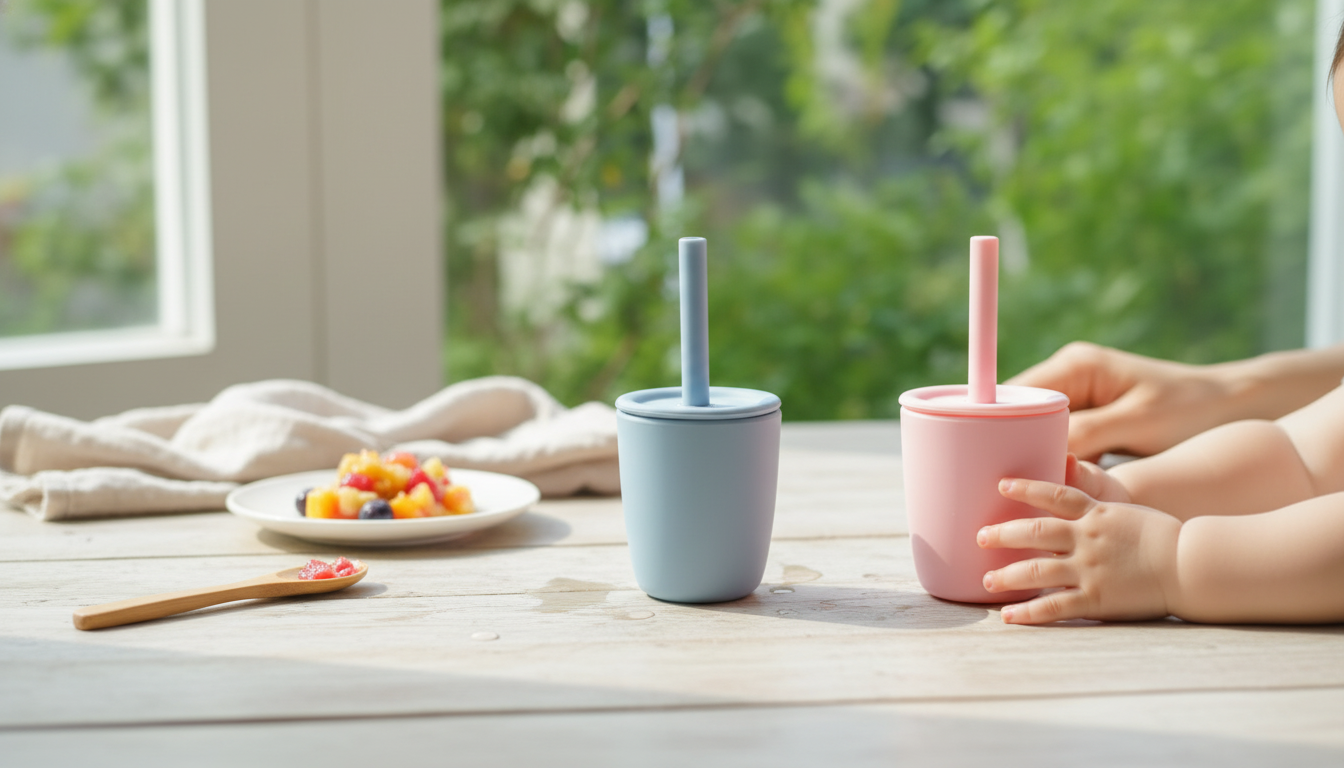
A straw cup can make the shift from bottle feeding to independent drinking feel far less stressful—especially when it’s soft to hold, gentle on little mouths, and built to stay closed in diaper bags and car seats. A truly leak-resistant cup isn’t only about a “no-spill” label; everyday performance comes from smart design, correct assembly, and consistent cleaning. Below is a practical guide to what matters most for daily use: spill control, silicone benefits, sipping skills, and seal-friendly care.
Most leaks happen at predictable points: the lid, the straw opening, or the valve area (if the cup uses one). A tight-fitting lid and a well-seated straw do the heavy lifting. Even a tiny gap around the straw can create slow drips that show up as mystery puddles at the bottom of a bag.
It also helps to know that “leakproof” isn’t always the same as “pressure-proof.” Shaking, squeezing, altitude changes, and warm liquids can push fluid through a straw pathway. Many straw cups perform best with cool or room-temperature drinks, filled below the maximum line to leave a little air space for pressure changes.
Silicone bodies can be a quiet advantage here. Because silicone flexes instead of cracking, the cup is less likely to develop stress points that interfere with the lid’s seal over time. Still, even the best design can leak if it’s assembled slightly off—straw not pushed in all the way, gasket not seated flat, or lid tightened unevenly.
| What happens | Likely cause | Try this |
|---|---|---|
| Drips from straw tip | Straw not fully seated or damaged slit/valve | Remove and reinsert firmly; inspect for tears; replace straw if worn |
| Leaks around the lid | Lid not tightened evenly or seal misaligned | Reattach lid carefully; check gasket/seal placement; avoid cross-threading |
| Spills when squeezed | Cup designed for open flow or liquid forced by pressure | Use cooler liquids; avoid overfilling; confirm valve orientation (if applicable) |
| Sudden leak after dishwasher | Heat warp or residue affecting seal | Hand-wash lid/straw; recheck fit; ensure parts are fully dry before reassembly |
Silicone cups tend to feel “friendlier” in small hands. The soft-touch grip can be easier to hold during the wobbly early stages, and it’s often less irritating on gums when teething is in full swing.
Durability is another plus. Silicone’s flexibility helps it absorb drops without creating sharp edges or cracks that can happen with rigid plastics. That flexibility can also help a cup keep a more consistent seal after repeated everyday bumps.
Odor and stain resistance depends on care. Strong flavors (like berry smoothies) can linger if the cup isn’t washed promptly, and residue trapped in the straw can affect taste and flow. When selecting a silicone cup, look for clear care instructions, stated heat limits, and food-contact claims from the seller or manufacturer. If you want to learn more about how food-contact materials are regulated in general, the FDA offers helpful background information here: https://www.fda.gov/food/packaging-food-contact-substances-food-additives.
Learning to sip can be quick for some babies and slower for others, especially if they’re used to bottle flow. Start with a small amount of water and keep early practice low-pressure—short sessions, upright posture, and plenty of breaks. Many babies do better learning with thin liquids at first; thicker drinks can make the straw feel “hard” to use and may frustrate beginners.
Encouraging upright sipping also helps reduce mess and supports smoother swallowing—especially during car rides or stroller time when reclining can lead to dribbles. For routines like bedtime, water is usually the simplest option for cleanup and habit-building. For broader guidance on age-appropriate drinks and cup transitions, HealthyChildren.org (from the American Academy of Pediatrics) is a reliable starting point: https://www.healthychildren.org/.
For a clear, safety-focused overview of cleaning and sanitizing infant feeding items, the CDC provides step-by-step guidance: https://www.cdc.gov/hygiene/childcare/clean-sanitize.html.
If you’re looking for a simple, everyday cup designed to help reduce spills, the Leakproof Silicone Baby Straw Cup is positioned for daily use at meals, in daycare bags, and during travel where cups are often tipped or dropped. Availability can change, so confirm current details on the product page before ordering.
| Item | Detail |
|---|---|
| Name | Leakproof Silicone Baby Straw Cup |
| Price | 5.67 USD |
| Availability | In stock |
| Product page | https://gskbuy.com/leakproof-silicone-baby-straw-cup/ |
Silicone straws are generally considered a practical option when they’re made from food-grade silicone and used under supervision. Inspect straws regularly for tears or loose pieces, clean them thoroughly, and discard any straw that looks damaged or misshapen.
Leak performance varies by model and by the condition of the straw, valve, and seals. Even cups marketed as “leakproof” can drip if parts are worn, assembled incorrectly, or exposed to pressure changes from squeezing, shaking, or temperature shifts.












Leave a comment